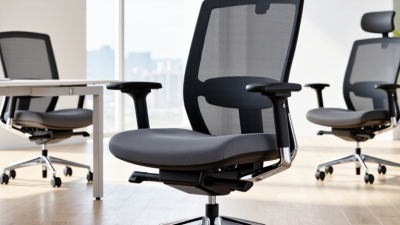
How to Choose the Right Executive Chair in 2026?
Choosing the right Executive Chair in 2026 requires more than comparing leather finishes or impressive product photos. A chair may look powerful behind a polished desk, yet feel uncomfortable after two hours of emails. The better decision begins with your working habits, body dimensions, desk height, and daily movement. Ergonomist Alan Hedge is widely associated with the advice, “The best posture is the next posture.” That simple idea still matters. A supportive Executive Chair should encourage small adjustments, not lock you into one rigid position.
Look closely at the lumbar support. Does it fit your lower back, or merely press against it? Check the seat depth with both feet flat on the floor. Your knees should remain comfortable, without pressure behind them. Adjustable armrests, a responsive recline mechanism, breathable upholstery, and a stable five-star base can improve long working sessions. In 2026, buyers should also examine repair options, material transparency, warranty length, and recyclable components. Sustainability claims need evidence. Marketing language is not proof.
Real-world testing remains valuable. Sit in the chair with your usual shoes, laptop, and desk setup. Notice pressure points after thirty minutes. Notice the noise, too. A premium chair can still disappoint. I have found that the most attractive model is not always the most supportive one. Your preferences may also change after several weeks. Choose carefully, but leave room for honest reassessment. A well-chosen Executive Chair should support concentration, movement, and comfort without demanding attention.

Define the Role, Work Setting, and Daily Needs
How to Choose the Right Executive Chair in 2026?
Define the Role, Work Setting, and Daily Needs
An executive chair should match the work, not just the office image. A director in long meetings needs stable lumbar support and adjustable armrests. Someone reviewing documents may need a softer recline and a wider seat. Identify the role before comparing materials, stitching, or appearance. A polished chair can still create pressure behind the knees.
Study the work setting carefully. Measure the desk height, available floor space, and screen position. Check whether the chair must move across carpet, hard flooring, or both. In workstation assessments, poor desk alignment often causes more discomfort than the chair itself. The seat should let your feet rest flat, with your knees close to hip level. Keep the monitor near eye height. Small adjustments matter.
Daily habits deserve equal attention. Count meeting hours, typing time, phone calls, and periods of leaning forward. Choose controls that are easy to reach without standing. Test the chair for at least fifteen minutes, if possible. Notice pressure points, heat buildup, and movement during recline. Do not trust a quick showroom impression. That is where I have been wrong before. A chair may feel luxurious briefly, then become tiring after a full afternoon. For heavier daily use, verify the adjustment range, structural warranty, and maintenance requirements through reliable documentation. Evaluate the person, the desk, and the routine together.
How to Choose the Right Executive Chair in 2026
The right executive chair depends on the role, work setting, and daily routine. Prioritize adjustable lumbar support, seat-height range, recline control, and stable mobility for long periods of computer work. In shared or hybrid spaces, easy adjustment and a compact footprint become more important.
Selection scores use a practical 1–5 ergonomic priority scale, where 5 indicates the greatest importance for that work setting.
Compare Executive Chair Features, Materials, and Adjustability
How to Choose the Right Executive Chair in 2026?
A strong executive chair should support movement, not force one rigid posture. The U.S. Bureau of Labor Statistics reported 946,290 private-industry cases involving days away from work in 2023. That figure is not chair-specific, but it highlights why daily comfort deserves careful attention. Fit matters more.
Compare seat height, seat depth, lumbar support, armrest range, and recline tension. Your feet should rest flat while your knees remain near a right angle. A sliding seat pan can support longer legs without pressing behind the knees. Adjustable armrests should let your shoulders relax beside the desk. Test it seated, not merely by touching the showroom cushion.
Material changes the experience. Breathable mesh can reduce heat during long meetings, while woven fabric often feels warmer and softer. Leather-like surfaces wipe clean easily, but they may feel hot against uncovered skin. Check foam density, stitching, caster quality, and the chair’s stated durability testing. ANSI/BIFMA X5.1 covers strength, stability, and durability requirements for office seating. Certification helps, though it does not guarantee personal comfort.
Look for transparent material claims, such as recycled content percentages or recognized environmental declarations. The U.S. Environmental Protection Agency’s 2023 purchasing guidance emphasizes credible third-party documentation for environmental claims. I would still question overly polished specifications. More adjustments can create more failure points. A simpler chair that fits your body may outperform a feature-heavy model.
How to Choose the Right Executive Chair in 2026? - Compare Executive Chair Features, Materials, and Adjustability
| Comparison Dimension | Ergonomic Mesh Executive Chair | Padded Fabric Executive Chair | Leather Executive Chair | Executive Task-Chair Hybrid |
|---|---|---|---|---|
| Best suited for | Long working sessions, warm offices, and users who prefer airflow | Professional offices requiring balanced comfort and moderate visual formality | Formal offices, boardrooms, and users prioritizing a traditional executive appearance | Daily computer work requiring stronger ergonomic adjustment and executive styling |
| Typical seat-height range | Approximately 17–22 inches (43–56 cm) | Approximately 18–22 inches (46–56 cm) | Approximately 18–22 inches (46–56 cm) | Approximately 16.5–22.5 inches (42–57 cm) |
| Seat-depth adjustment | Often available; approximately 16–19 inches (41–48 cm) | Less common; fixed depth is often approximately 18–20 inches (46–51 cm) | Uncommon on traditional executive designs | Frequently available; useful for supporting different leg lengths |
| Backrest adjustment | Recline tension and multi-position tilt are commonly offered | Usually includes tilt or lockable recline; lumbar adjustment varies | Usually includes tilt and recline lock; independent back-angle adjustment varies | Typically offers synchronized tilt, recline lock, and adjustable tension |
| Lumbar support | Adjustable lumbar support is common and can be height- or depth-adjustable | Built-in padded lumbar contour; adjustable support is model-dependent | Usually integrated into the back cushion; advanced adjustment is less common | Often includes height, depth, or tension adjustment for extended computer use |
| Armrest adjustability | 2D–4D armrests are commonly available: height, width, depth, and pivot | Usually height-adjustable; width or pivot adjustment varies | Often fixed or height-adjustable, with less emphasis on fine positioning | 2D–4D armrests are frequently available for keyboard and mouse alignment |
| Primary upholstery materials | Polyester, nylon, or elastomeric mesh over a metal or reinforced polymer frame | Woven polyester or blended textile over molded foam padding | Top-grain leather, split leather, bonded leather, or polyurethane upholstery | Fabric, mesh, or synthetic leather combined with molded foam and a reinforced frame |
| Breathability | High — open mesh allows continuous air movement | Medium — depends on textile weave and foam thickness | Low to medium — solid upholstery may retain more heat | Medium to high — strongly dependent on the selected upholstery |
| Cushioning characteristics | Usually firmer and more pressure-distributing; less prone to heat buildup | Soft to medium cushioning with a familiar upholstered feel | Medium to plush cushioning; comfort depends on foam density and upholstery quality | Medium-firm cushioning intended to support active posture changes |
| Frame and base construction | Reinforced polymer or metal frame with a five-star base | Metal or reinforced polymer frame with a five-star base | Steel-reinforced frame is common; base may be aluminum, steel, or reinforced polymer | Reinforced frame, five-star base, and heavy-duty tilt mechanism |
| Typical weight capacity | Commonly 250–350 lb (113–159 kg); verify the stated rating before purchase | Commonly 250–350 lb (113–159 kg); construction quality varies | Commonly 250–400 lb (113–181 kg), depending on frame and mechanism | Commonly 300–400 lb (136–181 kg), with higher-capacity versions available |
| Cleaning and maintenance | Mesh can be vacuumed and wiped; inspect tension and frame junctions periodically | Spot-clean with a suitable upholstery cleaner; fabric may absorb spills | Wipe regularly and use only a cleaner compatible with the specific leather or synthetic finish | Maintenance depends on upholstery; clean mechanisms and check fasteners periodically |
| Durability considerations | Mesh resilience, frame strength, and tilt-mechanism quality are the key factors | Foam recovery, seam quality, and textile abrasion resistance matter most | Leather grade, coating quality, stitching, and protection from sunlight affect service life | Adjustment mechanism quality, cylinder rating, and replacement-part availability are important |
| Sustainability factors | Often uses less upholstery material; look for recycled content and replaceable components | Choose durable, low-emission textiles and cushions with documented material content | Natural leather is a by-product of the meat industry, while synthetic leather uses polymer coatings | Prioritize repairable mechanisms, replaceable casters, and independently verified low-emission materials |
| Recommended adjustment priority | Seat height, lumbar position, armrest height, recline tension, and seat depth | Seat height, lumbar contour, armrest height, and recline lock | Seat height, recline tension, back-angle lock, and armrest position | Seat height, seat depth, lumbar depth, armrest position, recline tension, and forward tilt |
| Overall selection guidance | Best choice when airflow and ergonomic flexibility are more important than traditional upholstery | A balanced choice for general executive work and moderate daily computer use | Best choice when appearance, tactile comfort, and a formal setting are the main priorities | Best all-round option for executives who work at a computer for many hours each day |
Selection note: Dimensions, weight ratings, materials, and adjustment features vary by model. Confirm the manufacturer’s specification sheet, applicable safety certification, user height range, and recommended maximum weight before purchase.
Evaluate Ergonomics, Health Support, and Long-Term Comfort
How to Choose the Right Executive Chair in 2026?
A polished chair can still create back pain. I learned this after spending long meetings in a deep, soft seat. My hips tilted backward, and my shoulders slowly rounded. Comfort is not only about cushioning. It depends on posture, movement, and adjustability.
Check whether your feet rest flat while your knees stay near a right angle. The seat should support your thighs without pressing behind your knees. A height-adjustable lumbar support should fit the natural curve of your lower back. It should feel supportive, not forceful. Adjustable armrests can keep your shoulders relaxed while typing. Your elbows should remain close to your body.
Small details matter.
Test the chair for at least 20 minutes, if possible. Shift positions, reach for a phone, and lean back during a video call. A useful chair should support movement instead of locking your body in place. Materials should feel stable, breathable, and easy to maintain. Loose controls or uneven padding may become irritating after months of daily use.
Health support also requires realistic expectations. An executive chair cannot correct every posture problem or replace professional medical advice. Even the best design may feel wrong for a particular body. I still question whether “premium comfort” sometimes means excessive softness. Regular standing, short walks, and screen breaks remain essential. Long-term comfort is a daily practice, not a feature hidden in the chair.
Check Size, Compatibility, Durability, and Maintenance Requirements
Choosing an executive chair in 2026 starts with measurements, not appearance. Measure the desk height, seat width, doorway, and available floor space. OSHA’s Computer Workstations eTool recommends adjustable seat height, lumbar support, and stable armrests. Your feet should rest flat, while your elbows stay near a 90-degree angle. A chair that looks impressive can still feel cramped after two hours.
Compatibility matters at home and in shared offices. Check the user’s height, weight range, desk clearance, and flooring type. ANSI/BIFMA X5.1 testing covers chair stability, strength, and durability. These tests offer useful evidence, but they do not predict every real-life failure. Daily leaning, uneven floors, and repeated reclining can expose weak parts sooner than laboratory testing. Grand View Research’s 2024 office-furniture report also identifies ergonomic adjustment as a key purchasing factor.
Tips: Test every adjustment before buying. Confirm replacement parts and cleaning instructions. Use a soft cloth for surfaces, and avoid harsh chemicals. Inspect casters, screws, tilt tension, and upholstery every few months. A five-minute check may prevent an expensive repair. I would not trust a long warranty alone; maintenance access matters more than impressive wording. Replace damaged gas lifts promptly, and keep the chair away from direct sunlight when materials fade easily.
Balance Budget, Sustainability, Warranty, and Purchasing Options
Choosing an executive chair in 2026 requires more than comparing prices. A $600 chair used eight hours daily, five days weekly, costs about six cents per working hour over five years. However, a low price can hide replacement parts, delivery fees, or weak adjustments. Check seat depth, lumbar support, armrest range, and tilt control in person. Short trials matter.
Sustainability should be measured, not assumed. The U.S. EPA reported 12.1 million tons of furniture and furnishings entered the municipal waste stream in 2018, with about 80.2% landfilled. The OECD’s Global Plastics Outlook found that only 9% of global plastic waste was recycled in 2019. Choose replaceable casters, repairable mechanisms, recycled content, and clear material disclosures. A recycled label alone proves little. I would question vague environmental claims.
Warranty terms reveal purchasing confidence. Look for coverage periods, labor inclusion, exclusions, and service response times. A five-year warranty is weaker when the mechanism has only one year of coverage. BIFMA’s X5.1 standard uses stability, strength, and durability testing, so request compliance evidence rather than accepting sales language. Purchasing through a contract dealer may provide installation and easier service. Direct online buying may reduce cost, but returns can be complicated. Refurbished seating can work well, though inspect the gas lift and frame carefully. My own purchasing mistake would be budgeting for the chair, but not for long-term maintenance.
Related Posts
-
What Is the Best Executive Chair in 2026?
-
Choosing the Right Executive Chair: How Ergonomics Can Boost Your Productivity
-
How to Choose the Best Office Ergonomic Chair?
-

“Securing Your Office: How to Navigate Import Certification for the Best Business Chairs”
-

How to Choose Boardroom Furniture That Enhances Collaboration and Productivity
-

What is Boardroom Furniture and How to Choose the Best Options?