
Why Choose a Multipurpose Electric Kettle for Wholesale?
Wholesale buyers are looking beyond a kettle that only boils water. In homes, hotel rooms, and small offices, one appliance may need to prepare tea, instant coffee, or quick meals. A Multipurpose Electric Kettle can meet those needs while helping retailers offer more practical value in a compact product.
The market signals are worth watching, but they need context. Grand View Research estimated the global electric kettle market at about USD 1.65 billion in 2023, with projected growth through 2030. This is a market estimate, not a promise of sales for any wholesaler. Still, it suggests continued commercial interest in electric kettles. Buyers should compare that broad trend with their own customer feedback, price range, and local demand before placing large orders.
Details matter on the shelf. A removable filter, clear water-level markings, automatic shut-off, and a stable handle can make daily use easier. Multi-temperature settings or keep-warm functions may also appeal to tea drinkers and busy households. Yet extra features are not automatically better. They can raise costs, complicate instructions, or create more points for quality checks. That trade-off deserves a closer look.
For wholesale sourcing, assess capacity, material specifications, warranty terms, packaging, and supplier quality controls. Request product samples and test how the lid, switch, and base feel after repeated use. Small details show up quickly in customer reviews. Not every feature will suit every market. A careful choice balances usefulness, reliability, and landed cost—not just a crowded feature list.
What Defines a Multipurpose Electric Kettle?
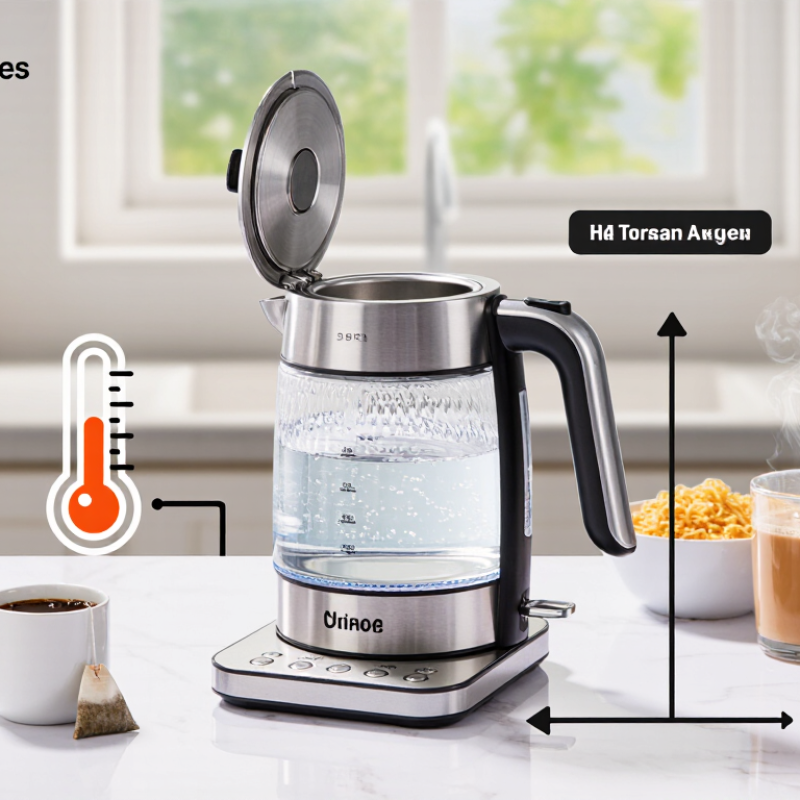
A multipurpose electric kettle does more than bring water to a boil. It combines practical functions, such as adjustable temperature settings, keep-warm control, and a removable tea infuser, in one countertop appliance. For example, a lower temperature can suit green tea, while boiling water works for instant oats or soup. The key is useful control, not a long list of features. Grand View Research estimated the global electric kettle market at USD 1.5 billion in 2023, reflecting demand for convenient hot-water appliances.
For wholesale buyers, “multipurpose” should describe capabilities that are clear and dependable. Look for readable water-level marks, a stable base, automatic shutoff, and controls that are easy to understand. Capacity matters too: a compact model may suit small households, while a larger jug serves shared kitchens. The U.S. Department of Energy says water heating accounts for about 18% of household energy use; this figure covers household water heating broadly, not kettles alone. Efficient filling and avoiding unnecessary reheating still make practical sense. Still, multipurpose can become a vague label. A kettle with many settings may be harder to clean or repair, so each added function deserves scrutiny.
A multipurpose electric kettle offers more than a simple boil: adjustable temperature settings help prepare different drinks at suitable temperatures. Brewing recommendations vary by tea type and personal preference; water reaches about 100°C at sea level.
Which Functions Distinguish It from a Standard Kettle?
Why Choose a Multipurpose Electric Kettle for Wholesale?
Which Functions Distinguish It from a Standard Kettle?
A standard kettle mainly boils water; a multipurpose model adds control and flexibility. Variable temperature settings suit green tea, delicate infusions, and instant coffee without bringing every cup to a full boil. The Specialty Coffee Association’s brewing guidance places ideal coffee water around 90–96°C, showing why precise heat settings can matter. A clear temperature display helps staff repeat the same preparation across shifts. Small details count.
Many models also include a keep-warm mode, a removable tea infuser, or timed heating. These features can reduce repeated boiling in busy offices, guest rooms, and cafés. For wholesale buyers, that means one countertop appliance may serve several routines. Still, “multipurpose” does not guarantee better performance. Check temperature accuracy, capacity, cleaning access, and whether the keep-warm function holds heat evenly. A narrow infuser can be frustrating to rinse. That part is often overlooked.
Tips: Ask suppliers for temperature-test results and sample units. Try the controls with real tea leaves and a full pot, not just an empty demo. Compare the warranty and spare-part options, too; a feature-rich kettle is less useful if its lid or filter is difficult to replace.
How Do Multiple Features Benefit Wholesale Buyers?
A multipurpose electric kettle can do more than heat water. For wholesale buyers, that extra utility may make one product relevant to several household routines. A shopper might use it for tea, instant soup, oatmeal, or warm water for a recipe. More uses can support broader shelf appeal, especially when retailers have limited display space. A clear water-level window also helps users avoid filling more than they need.
Small details matter.
Temperature options add practical value. Green tea, black tea, and coffee are often prepared at different temperatures, though preferences vary. A keep-warm setting can help in a busy office or shared kitchen. Automatic shutoff and boil-dry protection are useful features, but buyers should review how they work in product testing and documentation.
Features need to be clear. Controls matter.
Confusing buttons can cancel the benefit of extra settings. For wholesale planning, multiple functions may simplify assortment decisions and give retailers more useful product details to share. Yet extra settings can raise costs, increase repair questions, or make the interface feel crowded. Not every buyer wants a complicated kettle. Check capacity, material specifications, cord design, cleaning access, and warranty terms before ordering in volume.
A removable filter is handy, but it still needs regular cleaning. Ask suppliers for test records and sample units, then assess the controls with real users.
One awkward button can change the whole impression. Slightly inconvenient, but worth noticing.
What Factors Matter When Evaluating Kettles for Wholesale?
Wholesale buyers should compare more than kettle capacity and unit price. Check whether the base, lid, handle, and water-level marks feel sturdy during repeated handling. A 1.5-litre model may suit family use, while adjustable temperature settings can serve tea, instant meals, and other hot drinks. Not every feature sells. Confirm that controls are easy to read and replacement parts are available.
Safety and energy claims deserve evidence. IEC 60335-2-15 covers household appliances for heating liquids, including relevant safety requirements; ask suppliers for test documentation rather than relying on a product sheet alone. The U.S. Energy Information Administration’s 2020 Residential Energy Consumption Survey reports that water heating accounts for about 18% of household energy use. That figure covers all household water heating, not kettles, but it shows why buyers notice energy use. Compare boil times and measured power consumption under the same test conditions.
Packaging and service terms matter at scale. Ask for carton dimensions, drop-test details, spare-part lead times, and warranty exclusions. Small details matter. Test samples with a full boil, a partial fill, and a damp counter nearby. A multi-use kettle can broaden appeal, though extra functions may add failure points. That trade-off is easy to overlook.
Why Choose a Multipurpose Electric Kettle for Wholesale? - What Factors Matter When Evaluating Kettles for Wholesale?
Use this checklist to compare products and suppliers. Specifications vary by model and destination market, so confirm all details with the supplier and verify applicable local requirements before ordering.
| Evaluation factor | What to check | Why it matters for wholesale | Practical verification |
|---|---|---|---|
| Capacity and intended use | Compare usable capacity, minimum fill level, and suitability for home, office, hospitality, or shared spaces. Many household models are around 1.5–1.8 L. | A suitable capacity broadens the range of customers and applications a product can serve. | Request the rated capacity, minimum and maximum fill marks, and product dimensions. |
| Power and electrical compatibility | Check rated voltage, frequency, plug type, and wattage. Household kettles commonly fall within roughly 1,500–2,200 W, but ratings vary by market and model. | Electrical specifications must match the destination market and intended outlet; wattage also affects heating performance and circuit load. | Confirm the rating label, plug configuration, and test documentation for each target market. |
| Multipurpose functions | Assess useful functions such as temperature selection, keep-warm mode, water-level viewing, and removable filtration. Check whether each function is available on the specific model. | Relevant features can support different user preferences, but unnecessary functions may add cost or complexity. | Test controls, temperature settings, hold time, and filter removal on production samples. |
| Safety protections | Look for automatic shut-off after boiling and boil-dry protection. Check lid security, handle stability, and whether hot surfaces are clearly identified. | Safety features help reduce foreseeable risks during everyday operation and are important considerations for product compliance. | Review test reports and verify shut-off and boil-dry protection using samples according to the product instructions. |
| Materials and water-contact parts | Identify the materials used for the body, inner vessel, lid, filter, and seals. Common kettle materials include stainless steel, glass, and heat-resistant plastics. | Material choice affects durability, appearance, maintenance, product weight, and applicable food-contact requirements. | Request a material declaration and destination-market food-contact documentation for parts that contact water. |
| Ease of cleaning and maintenance | Check lid opening, access to the interior, removable filters, and cleaning instructions. Mineral scale can build up in kettles, especially in hard-water areas. | Straightforward maintenance can improve the user experience and reduce avoidable service enquiries. | Inspect the opening and filter, and confirm recommended descaling and cleaning instructions are included. |
| Build quality and usability | Evaluate the handle, lid, switch, base connection, cord storage, pouring control, and stability on a flat surface. A 360-degree cordless base is a common design feature. | Consistent operation and robust construction matter when products are sold in volume and used frequently. | Inspect samples and check representative units for fit, finish, wobble, leaks, and repeated operating-cycle performance. |
| Compliance and documentation | Confirm the standards, approvals, labeling, and documentation required in the destination country. Requirements differ by market and product configuration. | Correct, valid documentation helps assess whether the product can be legally imported and sold in the intended market. | Obtain certificates and test reports, verify their scope and model numbers, and check requirements with the relevant market authority or qualified compliance professional. |
| Wholesale terms and supply capacity | Compare minimum order quantity, production lead time, repeat-order capacity, payment terms, and options for packaging or product customization. | Clear terms and realistic production capacity help buyers plan inventory and manage replenishment. | Request a written quotation, production schedule, sample terms, and details of any customization charges. |
| Packaging and shipping protection | Review retail packaging, protective inserts, carton quantity, carton dimensions, and shipping weight. | Packaging affects product protection, storage, freight planning, and presentation at the point of sale. | Request packaging specifications and assess a packed sample or shipping carton before confirming an order. |
| Warranty and after-sales support | Clarify warranty period, coverage, exclusions, spare-parts availability, and the process for handling defects or service requests. | Defined support terms help wholesalers set appropriate expectations and plan for post-sale issues. | Get warranty terms in writing and confirm how claims, replacement parts, and product feedback are handled. |
How Can Wholesalers Match Kettle Features to Customer Needs?
Why Choose a Multipurpose Electric Kettle for Wholesale?
How Can Wholesalers Match Kettle Features to Customer Needs?
Match features to routines, not to a crowded specification sheet. The National Coffee Association’s 2024 National Coffee Data Trends report found that 67% of U.S. adults had coffee in the past day. That signals a sizeable audience for kettles suited to pour-over brewing, not just boiling water. For compact households, a 0.8–1-liter model saves counter space. Families and shared offices may prefer 1.5 liters or more. These are useful starting points, not universal rules.
Look at the details customers notice in daily use. Adjustable temperature settings suit people brewing different teas or coffee. A clear water window helps prevent overfilling, while a wide opening makes cleaning easier. Keep-warm functions can help busy households, but they may add cost that budget-focused buyers do not value. Dry-boil protection is a practical safety feature. For wholesale assortments, compare these features with local voltage, plug types, price expectations, and common serving sizes before placing a large order.
Tips: Ask retailers which complaints they hear most: slow boiling, difficult cleaning, or confusing controls. Test sample units with real users. A feature can sound useful on paper and still feel fiddly in a small kitchen. Include a simple, mid-priced model alongside feature-rich options.
