
One Stop Solution for Office Furniture Supply
Why Choose Bathroom Hardware for Global Projects?
When a hotel, residential tower, or public facility spans several markets, small bathroom details can create large project risks. Bathroom Hardware must withstand repeated use, moisture, cleaning chemicals, and varied installation practices. A loose hinge or poorly matched drain can delay handover and damage user confidence. This is why global buyers assess more than appearance. They examine material grades, load performance, finish consistency, packaging, and replacement support before approving a supplier. The details matter.
Experienced project teams usually begin with site conditions, not a product brochure. They check water quality, humidity, wall structures, local dimensions, and maintenance routines. Stainless steel may suit a coastal resort, while another environment requires a different protective finish. Clear technical drawings reduce errors between designers, contractors, and installers. Reliable manufacturers should provide samples, inspection records, installation guidance, and traceable quality procedures. Independent testing and market-specific compliance evidence also strengthen procurement decisions. Requirements must be confirmed for each destination.
The strongest choice balances design flexibility with predictable delivery. Coordinated collections help bathrooms look consistent across rooms, floors, and countries. Standardized components can simplify training and spare-parts management. Yet standardization has limits. A fitting that works perfectly in one building may fail on another wall system. No supplier is perfect. No specification should escape review. Open communication, realistic lead times, and responsive after-sales service reveal a partner’s real reliability. For global projects, Bathroom Hardware is not merely an accessory. It supports operational performance, user experience, and long-term asset value.
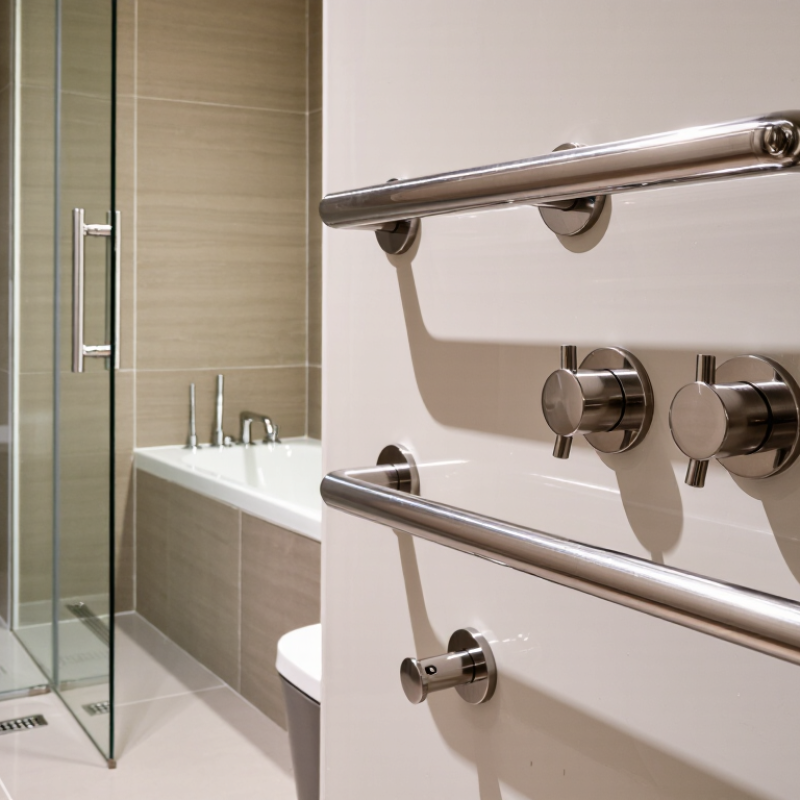
Global Project Requirements for Bathroom Hardware
Why Choose Bathroom Hardware for Global Projects?
Global bathroom projects demand more than attractive fixtures. Hardware must perform across different climates, water systems, and installation practices. Coastal sites may expose metal parts to salty air. High-humidity regions can accelerate corrosion around screws and hinges. Project teams should confirm material grades, surface treatments, and load ratings before approval.
Reliable sourcing also requires clear technical documents. Installation drawings, maintenance instructions, test reports, and packaging details reduce mistakes between suppliers and local contractors. Experienced teams often request sample units before mass production. This reveals problems with thread sizes, mounting depth, or uneven wall surfaces. Small details matter. However, even careful planning can miss local preferences or site conditions. A second inspection is worth the time.
Tips: Compare water pressure requirements, corrosion resistance, and installation tools for each market. Check whether replacement parts are available locally. Confirm accessibility needs, cleaning routines, and required certifications with qualified project professionals. Avoid selecting hardware by appearance alone. A polished finish may look excellent but perform poorly under frequent cleaning or heavy use. Allow extra time for customs documentation and protective packaging. One overlooked fitting can delay an entire bathroom schedule.
| Project Dimension | Typical Bathroom Hardware Scope | Global Requirement or Reference | Key Technical Criteria | Why It Matters in International Projects | Recommended Documentation |
|---|---|---|---|---|---|
| Water Efficiency | Washbasin faucets, shower mixers, showerheads and flush-control hardware | Local water-efficiency regulations and project specifications | Verify maximum flow rates, pressure range and test conditions in litres per minute. Requirements vary by country, building type and certification scheme. | Efficient fittings can reduce potable-water consumption while maintaining acceptable user performance. | Flow-rate test reports, product datasheets, efficiency certificates and installation instructions |
| Potable-Water Safety | Faucet bodies, valves, connectors, flexible hoses and shower components | National drinking-water contact regulations, such as NSF/ANSI/CAN 61 or equivalent local requirements | Materials in contact with potable water should be assessed for chemical leaching and hygienic suitability. | Different markets apply different approval systems; early verification helps prevent customs, inspection and handover delays. | Material declarations, potable-water approvals, test reports and compliance statements |
| Pressure and Temperature | Mixing valves, thermostatic valves, shower systems and supply connections | Applicable plumbing code and product standard for the destination market | Confirm rated working pressure, maximum operating temperature, pressure-loss performance and thermal protection features. | Bathrooms may be supplied by municipal systems, booster pumps, gravity tanks or hot-water cylinders with different operating conditions. | Pressure-temperature ratings, hydraulic test results and commissioning requirements |
| Backflow Protection | Faucets, bidet fittings, hand showers and hose-connected outlets | Local plumbing code requirements for backflow prevention and air gaps | Use suitable check valves, vacuum breakers or air-gap arrangements where required by the installation configuration. | Backflow controls help protect the potable-water system from contaminated or non-potable water. | Plumbing schematics, valve details, backflow test records and installation manuals |
| Corrosion Resistance | Faucets, shower rails, towel bars, robe hooks, shelves and other exposed accessories | Project exposure classification and relevant corrosion-resistance testing | Specify suitable base materials, plating or coating systems, fasteners and cleaning limitations for humid, coastal or chemically aggressive environments. | Material selection affects service life in hotels, hospitals, coastal buildings and high-use public facilities. | Material specifications, coating thickness or finish data, salt-spray results where applicable |
| Mechanical Durability | Lever handles, cartridges, hinges, sliding rails, grab bars and dispensers | Product-specific durability tests and the project’s expected usage frequency | Assess cycle life, pull-out resistance, load capacity, fastening strength and resistance to repeated operation. | High-traffic projects require hardware that remains functional and secure after frequent daily use. | Cycle-test reports, load-test results, fixing details and maintenance schedules |
| Accessibility | Lever-operated faucets, grab bars, shower controls, seats and accessible accessories | Local accessibility legislation; examples include ADA Standards in the United States and ISO 21542 principles internationally | Check reach ranges, operating forces, clearances, mounting heights, support loads and visual or tactile identification. | Accessible layouts support inclusive use and help satisfy statutory requirements in public and commercial buildings. | Accessible bathroom drawings, mounting templates, load ratings and compliance review records |
| Hygiene and Cleaning | Touch-free faucets, flush controls, soap dispensers, handles and wall-mounted accessories | Healthcare, hospitality or public-facility hygiene specification, where applicable | Prefer easy-to-clean surfaces, reduced dirt traps, compatible sealants and finishes that tolerate approved cleaning chemicals. | Hygienic design can reduce maintenance effort and support infection-control procedures in sensitive environments. | Cleaning-chemical compatibility chart, hygiene specification and maintenance instructions |
| Electrical Safety | Sensor faucets, illuminated mirrors, heated accessories and electronic flush systems | Destination-country electrical regulations and bathroom zoning rules | Confirm rated voltage and frequency, ingress-protection rating, earthing, residual-current protection and permitted installation zone. | Electrical requirements differ by jurisdiction and bathroom zone; incorrect selection can create safety and approval risks. | Electrical test reports, installation diagrams, IP rating declarations and wiring instructions |
| Dimensional Coordination | Faucets, basins, concealed valves, shower rails, mirrors and accessory sets | Approved architectural, plumbing and interior-design drawings | Coordinate rough-in dimensions, wall depths, connection sizes, mounting centers, access panels and finished-floor levels. | Early dimensional coordination reduces rework when products are sourced from different regions. | Shop drawings, BIM files, rough-in guides, templates and coordinated reflected-ceiling or wall elevations |
| Connection Compatibility | Supply hoses, valves, adapters, traps and concealed installation bodies | Destination-market pipe-thread, connection and plumbing-system conventions | Confirm thread type, nominal size, connection orientation, seal method and compatibility with local pipe materials. | Thread and connection differences can prevent direct installation even when the visible product is dimensionally suitable. | Connection schedules, dimensional drawings, adapters list and installation parts schedule |
| Fire and Building Compliance | Wall penetrations, concealed cistern access panels and bathroom assemblies in regulated buildings | Local building, fire-stopping and acoustic requirements | Protect fire-rated or acoustic partitions when pipes, brackets and concealed components pass through walls or floors. | Bathroom hardware must not compromise the performance of the surrounding building assembly. | Approved penetration details, fire-stopping data, acoustic specifications and inspection records |
| Sustainability and Materials | Metal hardware, packaging, replaceable cartridges and modular accessories | Project sustainability targets and applicable environmental declarations | Consider recycled content, product life, repairability, replaceable wear parts, packaging reduction and responsible material disclosure. | Durable and repairable products can lower replacement frequency and support green-building documentation. | Environmental product declarations, material declarations, recycled-content data and take-back information |
| Installation and Local Service | Complete hardware sets, spare cartridges, seals, sensors and specialty tools | Project programme, local installer capability and required warranty period | Provide multilingual instructions, standardized spare parts, replacement procedures and clear commissioning steps. | Local support reduces installation errors, downtime and long-term maintenance costs after handover. | Installation manuals, spare-parts lists, warranty terms, training records and commissioning checklists |
| Quality Control and Handover | All visible and concealed bathroom hardware supplied to the project | Approved submittals, inspection and testing plan, and project handover requirements | Control model references, finish consistency, quantities, batch records, functional testing and final defect inspection. | Documented quality control provides traceability across multiple shipment batches and installation teams. | Approved submittals, inspection reports, delivery records, test certificates and as-built schedules |