
What Are the Top Lipstick Tube Manufacturers?
The search for reliable Lipstick Tube manufacturers begins with more than attractive samples. It requires evidence, testing, and a clear understanding of packaging performance. Grand View Research valued the global cosmetics packaging market at approximately USD 32.43 billion in 2022. Its forecast also indicates continued growth through 2030. This expansion increases supplier choice, but it also makes comparison more difficult.
A capable manufacturer should demonstrate stable wall thickness, smooth bullet movement, accurate color matching, and dependable closure strength. These details matter on a retail shelf and during daily consumer use. A tube may look premium, yet weak internal components can cause twisting, cracking, or product contamination. Manufacturers with ISO 9001 systems and cosmetic good manufacturing practices, such as ISO 22716-based controls, offer stronger quality evidence. However, certification alone is not enough. Buyers should review batch records, material declarations, compatibility tests, and production photographs.
Sustainability also changes the selection process. Smithers’ report, The Future of Sustainable Packaging in Cosmetics to 2028, highlights growing pressure for lighter materials, recycled content, and improved recyclability. Aluminum, PCR plastic, paper-based components, and refillable designs each create different technical compromises. None is automatically better. That deserves scrutiny. A recyclable tube still needs realistic collection infrastructure and clear disposal guidance. This guide compares leading Lipstick Tube manufacturers through product quality, customization, minimum order quantities, lead times, compliance support, and sustainability practices. The ranking may not suit every brand. A luxury launch, a mass-market line, and a small independent label need different manufacturing partners. Direct samples and factory verification remain essential before any purchase decision.
Types of Lipstick Tube Manufacturers
What Are the Top Lipstick Tube Manufacturers?
Types of Lipstick Tube Manufacturers
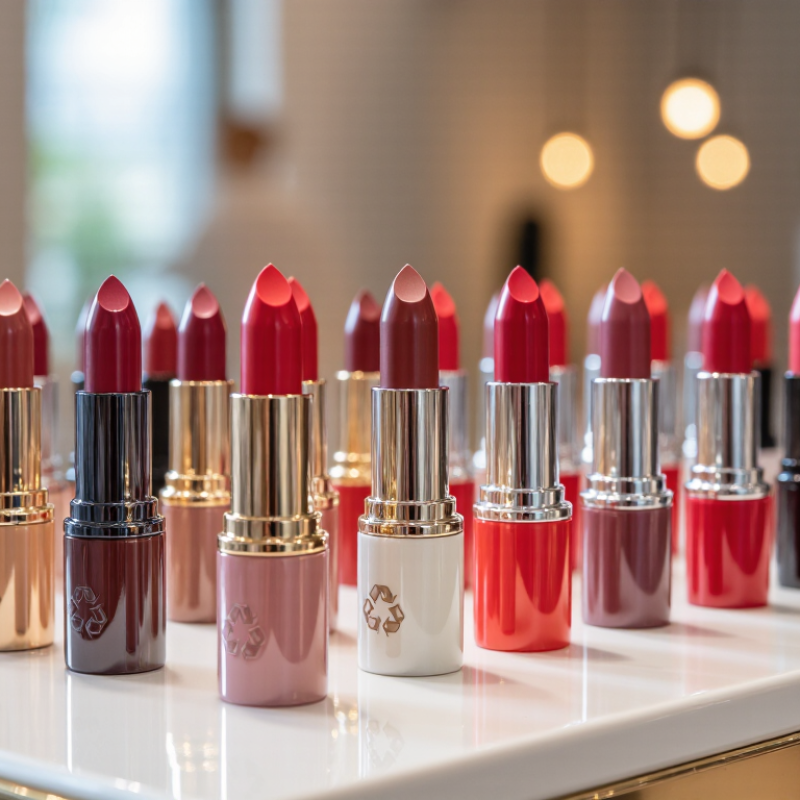
Lipstick tube manufacturers usually fall into four practical categories. Stock-packaging manufacturers produce standard tubes in set sizes, colors, and mechanisms. They suit smaller cosmetic launches because tooling costs are lower and samples arrive faster. Custom manufacturers develop unique shapes, magnetic closures, refill systems, or unusual finishes. These projects need stronger engineering control and longer testing periods.
Contract packaging manufacturers can support tube production, filling, assembly, and decoration under one supply plan. They are useful when a cosmetic company needs fewer handoffs. Decoration specialists focus on hot stamping, spray coating, silk screening, and metallic effects. Their work turns a plain tube into a shelf-ready package. Material-focused manufacturers produce aluminum, plastic, recycled-content, or refillable components. Grand View Research valued the global cosmetics packaging market at about USD 32.7 billion in 2022 and forecast continued growth through 2030. However, growth does not guarantee better packaging. Some “sustainable” claims still lack clear lifecycle evidence.
Tips: Ask for material certificates, closure-cycle test results, coating adhesion data, and a physical sample. Confirm whether the quoted price includes molds, decoration, assembly, and shipping. The lowest quote may hide costly tooling changes. I have found that a slightly heavier tube can feel more premium, but it may increase transport emissions. That trade-off deserves honest review. Reports from Smithers also indicate that packaging performance and recyclability are becoming stronger purchasing factors, not optional details. For reliable sourcing, compare at least three manufacturers and test tubes with the actual lipstick formula. Specifications on paper can still fail in warm storage.
What Are the Top Lipstick Tube Manufacturers? — Types of Lipstick Tube Manufacturers
Lipstick tube manufacturers commonly specialize in standard twist-up, refillable twist-up, or paperboard push-up constructions. The chart compares the typical number of core physical components in each tube format, excluding decorative coatings, labels, and optional accessories.
Key Factors for Evaluating Lipstick Tube Suppliers
What Are the Top Lipstick Tube Manufacturers?
The strongest lipstick tube manufacturers are not always the largest factories. A reliable supplier should provide consistent dimensions, clean assembly, and clear production records. Request physical samples before discussing large orders. Check the cap fit, base movement, twist resistance, and surface finish by hand. The tube should feel stable, without sharp edges or loose parts. Samples can mislead. Test more than one batch.
Material knowledge matters during supplier evaluation. Ask whether the tube uses aluminum, plastic, recycled content, or a mixed structure. Confirm compatibility with the lipstick formula, especially when oils, waxes, or fragrances are involved. A professional manufacturer should explain its testing methods and provide traceable quality documents. Review inspection reports, defect limits, and factory audit results. Paperwork is not proof. Independent testing may expose weaknesses that a showroom sample hides.
Production capability also affects long-term reliability. Compare minimum order quantities, tooling fees, lead times, packaging protection, and replacement policies. Ask how the supplier handles color variation between batches. Request a written approval process for artwork and samples. Communication speed matters when a mold needs adjustment. Low prices attract attention, but unstable delivery creates hidden costs. I would also question impressive sustainability claims without measurable data. A careful supplier welcomes difficult questions, although no evaluation is completely free from risk. JSImport
Leading Global Lipstick Tube Manufacturers
Top lipstick tube manufacturers are judged by more than polished samples. Tooling accuracy, filling-line compatibility, material traceability, and delivery stability matter equally. Grand View Research estimates the global lipstick market reached roughly USD 12 billion in 2023, creating strong demand for reliable primary packaging. A capable manufacturer should support aluminum, plastic, and recycled-content options while maintaining consistent dimensions across large production runs.
Details reveal expertise. A well-made tube should open smoothly, resist twisting, and protect a 12-millimeter lipstick core from heat and impact. Manufacturers serving international markets often provide mold development, surface decoration, color matching, and batch inspection. Intertek and SGS testing can help verify material safety, coating adhesion, and mechanical performance. These checks are practical, not decorative.
Sustainability is becoming harder to ignore. Smithers reports that beauty packaging suppliers are moving toward lighter structures, recyclable materials, and reduced component complexity. However, “recyclable” claims can be incomplete when tubes combine metal, plastic, magnets, and thick coatings. This is where buyers must question the specification. A simpler tube may create less visual excitement, yet improve sorting and recovery. Some manufacturers still publish limited lifecycle data, which should weaken confidence until independent evidence appears. Leading suppliers therefore combine production scale with transparent documentation, pilot samples, and measurable quality controls.
What Are the Top Lipstick Tube Manufacturers? – Leading Global Lipstick Tube Manufacturers
| Evaluation Dimension | Common Industry Benchmark | Why It Matters When Selecting a Manufacturer | Recommended Verification Evidence |
|---|---|---|---|
| Core Tube Construction | Standard lipstick packaging generally consists of a protective cap, an outer case, a twist-up mechanism, a holder, and a base. | A well-engineered multi-part assembly helps prevent product movement, contamination, accidental opening, and inconsistent product elevation. | Technical drawings, component specifications, assembly samples, and dimensional inspection reports. |
| Material Options | Common materials include polypropylene (PP), acrylonitrile butadiene styrene (ABS), aluminum, zamak, and post-consumer recycled plastics where suitable. | Material selection affects weight, durability, appearance, recyclability, compatibility, and the perceived value of the finished package. | Material declarations, safety data, recycled-content documentation, and compatibility test results. |
| Manufacturing Processes | Typical processes include injection molding, metal forming, CNC machining, die casting, assembly, and precision fitting of the rotary mechanism. | Access to several production processes supports complex designs, consistent tolerances, and efficient development of both plastic and metal components. | Process flow charts, equipment lists, production samples, and in-process quality-control records. |
| Surface Decoration | Frequently specified finishes include anodizing, electroplating, spray coating, UV coating, metallization, hot stamping, silk screening, and laser engraving. | Decoration capability determines the range of visual effects, logo treatments, color consistency, scratch resistance, and premium presentation. | Color standards, coating specifications, adhesion tests, abrasion tests, and approved decoration samples. |
| Mechanism Performance | Twist-up mechanisms should operate smoothly, maintain alignment, and support repeated opening and closing without excessive looseness or jamming. | Reliable mechanism performance protects the lipstick and improves the user experience throughout the product lifecycle. | Torque testing, cycle testing, drop testing, leakage checks, and functional inspection criteria. |
| Quality Management | ISO 9001 is a widely recognized quality-management framework used by manufacturers to control processes and improve consistency. | A documented quality system supports traceability, corrective actions, supplier control, inspection planning, and repeatable production. | Current certification documents, audit reports, inspection plans, nonconformance records, and corrective-action procedures. |
| Regulatory and Chemical Compliance | Depending on the destination market, packaging may need to address requirements such as EU REACH, RoHS where applicable, heavy-metal restrictions, and applicable packaging legislation. | Compliance reduces regulatory risk and helps ensure that coatings, pigments, plastics, and metal finishes meet market-specific requirements. | Third-party laboratory reports, declarations of conformity, restricted-substance statements, and bill-of-material reviews. |
| Sustainability Capability | Common sustainability approaches include lightweighting, mono-material design, recycled resin, recyclable metal components, reduced decoration, and ISO 14001 environmental management. | These options can reduce material use and environmental impact while supporting sustainability claims that are technically substantiated. | Material-origin records, recycled-content certificates, life-cycle information, environmental-management certificates, and recyclability assessments. |
| Customization and Development | Leading suppliers commonly support concept refinement, 3D modeling, mold development, color matching, prototype production, and pilot runs. | Integrated development reduces communication gaps and helps convert a cosmetic packaging concept into a manufacturable product. | Development schedules, prototype reviews, mold ownership terms, engineering change procedures, and pilot-run reports. |
| Global Supply Capability | Internationally oriented manufacturers typically provide export documentation, standardized packaging specifications, quality records, and coordinated logistics support. | Global supply capability improves delivery coordination and simplifies purchasing for brands serving multiple markets. | Export references, packaging and labeling procedures, production capacity plans, logistics records, and business-continuity documentation. |
| Testing and Inspection | Relevant checks may include dimensional inspection, appearance inspection, color measurement, coating adhesion, torque, drop, vibration, and compatibility testing. | Structured testing helps identify defects before shipment and verifies that the tube performs reliably during filling, transport, and consumer use. | Inspection standards, calibrated-equipment records, laboratory reports, control plans, and batch-release documentation. |
| Supply Chain Transparency | Robust suppliers maintain traceability for raw materials, components, production batches, inspection results, and approved subcontracting activities. | Traceability supports faster investigations, consistent quality, regulatory response, and responsible sourcing decisions. | Batch coding systems, supplier lists, traceability samples, change-notification procedures, and social-compliance documentation. |
Manufacturing Processes and Customization Options
Leading lipstick tube manufacturers combine engineering discipline with flexible customization. Their process usually begins with aluminum, ABS, or recycled plastic selection. Engineers then create CAD drawings and test the internal component for fit. Injection molding forms plastic shells, while stamping shapes metal parts. Surface treatments may include anodizing, coating, frosting, or soft-touch finishes.
Assembly requires consistent pressure and clean working areas. Workers inspect the elevator, base, and rotating mechanism before final packing. Torque testing checks whether the tube turns smoothly without slipping. Drop tests reveal weak caps and loose components.
Color matching often uses approved samples, not screen images. This matters because lighting can change a shade dramatically. Decoration options include hot stamping, screen printing, laser engraving, and molded logos.
Custom sizes are possible, but unusual shapes may increase tooling costs and production time. A perfect design on paper can feel awkward in the hand. That mistake is common.
Tips: Request a prototype before mass production. Confirm material specifications, surface durability, and component compatibility. Ask for inspection records and a clear tolerance range. Keep one approved sample for future comparisons. Small details matter.
How to Choose the Right Lipstick Tube Manufacturer
Choosing the right lipstick tube manufacturer requires more than comparing unit prices. The “top” supplier is not always the largest. It should provide consistent dimensions, reliable decoration, and stable production capacity. Grand View Research estimated the global cosmetics packaging market at over USD 30 billion in 2023, with continued growth expected through 2030. This pressure encourages faster launches, but speed can weaken quality control. Ask for tolerance data, material specifications, production lead times, and documented inspection procedures.
Request physical samples from several production batches. Check cap alignment, twisting smoothness, filling compatibility, and surface durability. A tube may look excellent under showroom lighting, yet fail after repeated opening. Supplier audits should review incoming-material checks, mold maintenance, batch traceability, and corrective-action records.
Packaging sustainability also needs evidence. Reports from Smithers indicate that recyclable and lower-impact packaging demand is increasing, but recyclability depends on the complete component design, not one material alone. Confirm testing methods instead of accepting broad environmental claims.
Tips: Compare total cost, not only price. Include tooling, sampling, decoration, freight, and rejected units. Request a pilot order before signing a large contract. Review quality records and customer references carefully. Euromonitor’s packaging research highlights growing consumer attention to convenience and sustainability, but these findings are broad market signals, not guarantees for every product category. That distinction matters. I would not trust a perfect prototype alone. Manufacturing consistency is proven during repeated production, where small defects become expensive.
Article Source:
- Blue Lipstick Tubes、Clear Lipstick Tube、Cosmetic Lipstick Tubes、Cute Lipstick Tubes、Cylinder Lipstick Tube、Empty Lipstick Tube、Empty Plastic Lipstick Tubes、Fancy Lipstick Tube、Lipstick Tube、Printed Li
- Tube、Products Blue Lipstick Tubes、Clear Lipstick Tube、Cosmetic Lipstick Tubes、Cute Lipstick Tubes、Cylinder Lipstick Tube、Empty Lipstick Tube、Empty Plastic Lipstick Tubes、Fancy Lipstick Tube、Lipstick T
