
Top 10 Metal Cutting Boards for Every Kitchen

A cutting board seems simple until a knife slips, a tomato slides, or a surface proves difficult to clean. Metal offers a distinct alternative to wood and plastic, but the label alone does not guarantee a better kitchen tool. Material, finish, stability, and knife feel all matter. Small details matter.

The CDC estimates that foodborne illnesses affect about 48 million people in the United States each year, leading to roughly 128,000 hospitalizations and 3,000 deaths. Those figures do not show that metal boards prevent illness. They do underline why cleanable surfaces and careful food handling deserve attention. Food-safety specialist Dr. Benjamin Chapman of NC State emphasizes separating raw foods from ready-to-eat foods and cleaning equipment between tasks. That practical guidance matters more than any board’s marketing claim.

This guide compares ten Metal Cutting Board options through everyday use, not appearance alone. It considers surface texture, board weight, countertop grip, cleanup, and potential effects on knife edges. Stainless steel can feel cool and rigid; some users may also find it noisy or slippery. Those trade-offs deserve honest attention. FDA Food Code guidance for food-contact surfaces focuses on characteristics such as being durable, smooth, and cleanable—not on declaring metal universally superior. Use this list to find a board that suits your cooking habits, while keeping sound food-handling practices in view.
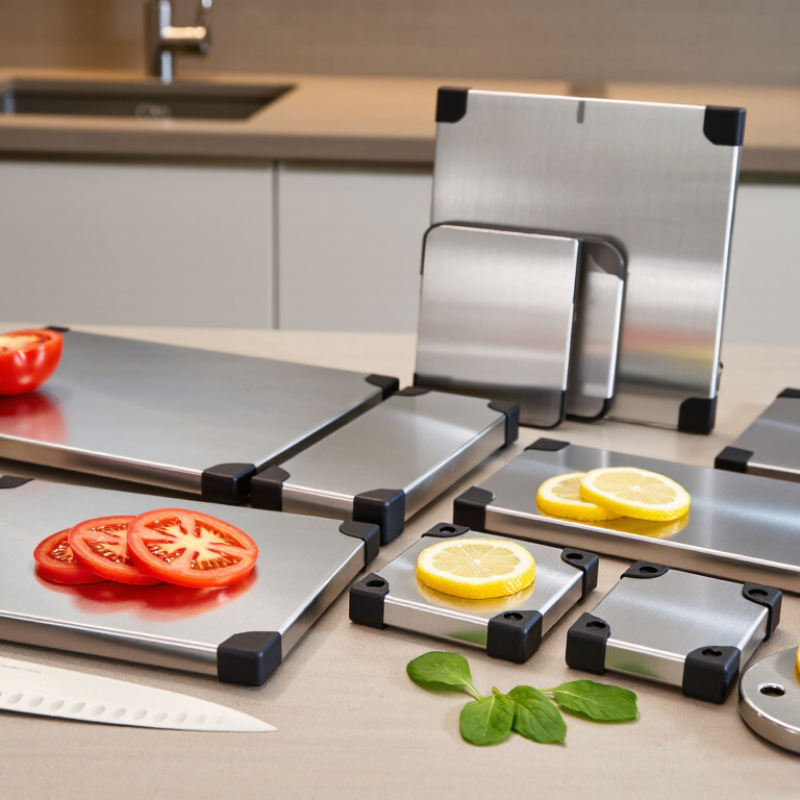
Top 10 Metal Cutting Boards for Every Kitchen

Metal Cutting Boards: Materials, Designs, and Kitchen Uses

Metal cutting boards differ more than their silver surfaces suggest. Stainless steel is common because it resists rust and handles frequent washing. Some boards use titanium, which is light and corrosion-resistant, but often costs more. Material alone does not make a board practical. Thickness, finish, and grip matter too.

A smooth metal surface wipes clean easily, yet can feel slippery under a wet onion. Textured or lightly etched designs may improve control, though deep grooves can trap food. Look for rounded edges and nonslip feet that keep the board steady on a damp counter. A thin board stores neatly. A heavier one may shift less, but it is harder to lift and rinse. Small details matter.

Metal boards can be useful for portioning raw meat or trimming fish because their nonporous surfaces are straightforward to clean. Follow the maker’s care instructions; not every board belongs in a dishwasher. They are less forgiving on knife edges than wood or plastic, and chopping can sound sharp in a quiet kitchen. Not ideal for every task. I would keep a softer board nearby for frequent vegetable prep. That extra board takes space, admittedly, but metal’s hygiene and durability do not erase its trade-offs.

Key Factors for Evaluating Metal Cutting Boards

A metal cutting board should be judged by more than its polished surface. Check what metal it uses, how thick the panel is, and whether its edges feel smooth. A thin board may flex or ring loudly against the counter. A heavier one can stay put, but may be awkward to lift and wash. That trade-off matters.

Consider how the surface behaves with your knives. Stainless steel is nonporous and generally easy to clean, yet it can dull knife edges faster than wood or plastic. Metal may also feel slippery when wet, so look for a stable base or a design that grips the counter. Test it with a damp cloth underneath; a board that shifts while chopping is a poor fit. Not every kitchen needs one.

Inspect corners, seams, and any attached handles for spots where food or moisture could collect. A smooth, simple construction is easier to wash thoroughly. Listen, too: repeated chopping on metal can be noisy, especially in a small kitchen. These details are easy to overlook in product photos. I would not choose a board on appearance alone, and even careful comparisons cannot predict how it will feel with your own knives.

Top 10 Metal Cutting Boards for Every Kitchen

Key Factor: Material Density

Density affects a board’s weight and portability. Typical values are approximately 8.0 g/cm³ for 304 stainless steel, 4.51 g/cm³ for commercially pure titanium Grade 2, and 2.70 g/cm³ for 6061 aluminum. Actual values can vary by alloy and product; density alone does not determine cutting performance or food safety.

Ten Metal Cutting Board Options for Different Kitchen Needs

Metal cutting boards can suit kitchens that value a wipe-clean work surface, but they are not ideal for every task. Metal is hard on knife edges, and a smooth board can slide if its base is unstable. The best choice depends on your counter space, prep habits, and willingness to use a separate board for delicate knives.

Ten setups cover different needs. A compact stainless board fits small counters. An oversized one gives you room for batch prep. A reversible design offers two usable faces. A juice channel helps catch liquid from fruit or meat. A raised lip can keep scraps on the surface. Non-slip feet add stability. A slim board is easier to store. A thicker, rigid board feels steadier during chopping. A polished finish wipes down easily. Removable corner grips can help prevent movement, though they need cleaning too. One detail is easy to overlook: metal can sound sharp and clattery in a quiet kitchen.

Tips: Put a damp, folded towel beneath a board without secure feet. Use a softer board for routine knife work, and reserve metal for tasks where its easy-clean surface is useful. Check edges and fittings for damage; a wobbly board is a poor trade for extra durability.

How to Match a Board to Your Cooking and Workspace

A metal cutting board should suit your cooking habits and counter, not just look sleek. Check its food-contact material, surface finish, and construction. A smooth, nonporous surface is generally easier to clean than one with scratches or seams. Match its size to your usual prep: a compact board works for herbs and citrus, while a larger one gives chopped vegetables room. Measure your sink and storage space, too. Heavy boards can stay steady, but they may be awkward to lift.

For frequent knife work, consider the trade-offs. Metal can dull knife edges and feel loud or slippery, especially with wet ingredients. Look for stable feet, or place a damp towel underneath. If you mainly use the board for serving, chilling pastry, or arranging ingredients, those drawbacks may matter less. Follow the care instructions; not every finish tolerates abrasive pads or high heat. It’s an easy detail to overlook.

Tips: Measure your counter and cabinet opening before buying. Press a corner to check for wobbling. For raw meat, use a separate board or clean carefully between ingredients. A metal board may wipe clean quickly, but it may not suit quiet chopping or sharp-knife upkeep.

Top 10 Metal Cutting Boards for Every Kitchen - How to Match a Board to Your Cooking and Workspace

Sizes and weights are approximate examples for comparison; actual measurements vary with sheet thickness and construction. Metal cutting surfaces are hard on knife edges, so these options are generally better for light-duty tasks than everyday chopping.
# Board Type Example Size and Approx. Weight Key Characteristics Best Match Care and Knife Considerations
1 304 stainless steel, flat sheet 12 × 18 in; 0.04 in thick; about 2.5 lb Corrosion-resistant, nonporous surface commonly used in food equipment. Small kitchens needing a smooth surface for dough, pastry, or light prep. Wash and dry after use. The hard surface can dull or damage knife edges.
2 316 stainless steel, flat sheet 12 × 18 in; 0.04 in thick; about 2.5 lb Offers greater resistance to chloride-related corrosion than 304 in many conditions. Coastal kitchens or workspaces where corrosion resistance is a priority. Still requires routine cleaning and drying; it is not gentler on knives than other metal surfaces.
3 430 stainless steel, flat sheet 12 × 18 in; 0.04 in thick; about 2.5 lb Magnetic stainless steel with useful corrosion resistance, though generally less resistant than 304 or 316. A dry workspace or occasional-use station where magnetic properties may be useful. Dry promptly, especially after contact with salty or acidic foods. Avoid prolonged wet storage.
4 Titanium sheet 12 × 18 in; 0.06 in thick; about 2.1 lb Lightweight and corrosion-resistant; typically a specialty, higher-cost option. Compact workspaces where low weight and easy handling matter. Clean according to the maker’s instructions. The rigid surface can still wear knife edges quickly.
5 Hard-anodized aluminum 12 × 18 in; 0.08 in thick; about 1.7 lb Lightweight aluminum with a treated surface; coating condition is important. A kitchen where a lighter board is easier to move and store. Do not use if the surface is deeply scratched, peeling, or otherwise damaged; follow care guidance.
6 Uncoated aluminum 12 × 18 in; 0.08 in thick; about 1.7 lb Very light and easy to handle, but the surface can scratch and react with acidic foods. Non-food tasks or occasional, brief use with foods that are not acidic. Not the best choice for tomatoes, citrus, or long food contact. Keep it clean and dry.
7 Stainless steel with a shallow perimeter channel 12 × 18 in; about 3–4 lb, depending on formed edges A shallow groove can help contain small amounts of liquid; it does not replace safe food handling. Light prep involving juicy ingredients, when a metal surface is specifically desired. Clean the channel thoroughly. Avoid heavy chopping to protect knives and prevent board movement.
8 Stainless steel with non-slip feet or backing 12 × 18 in; about 3–5 lb, depending on the base A grippy base can improve stability on a clean, dry counter. Workspaces where a loose, lightweight board would otherwise slide during gentle tasks. Check that feet or backing are food-contact appropriate and removable or cleanable; do not rely on them for forceful chopping.
9 Carbon steel sheet 12 × 18 in; 0.06 in thick; about 3.1 lb Strong but prone to rust if its protective oil or seasoning is lost. Generally not recommended as a routine food-cutting surface. Requires careful drying and maintenance; rust, coatings, and surface condition can make food use unsuitable.
10 Copper sheet 12 × 18 in; 0.04 in thick; about 2.5 lb Soft, easily marked, and reactive with some foods; surface suitability depends on its finish and construction. Not recommended for direct food cutting unless specifically designed and verified for that use. Scratches and reactions can be concerns. Choose a conventional food-grade cutting board for everyday prep.

Cleaning, Maintenance, and Safe Use of Metal Cutting Boards

Metal cutting boards are easy to wipe clean, but their smooth surface needs careful handling. Wash the board with hot water and dish soap after each use, especially after cutting raw meat or fish. Rinse away soap, then dry it fully with a clean towel. Standing water can leave marks or encourage corrosion on some metals. Check the care instructions before using a dishwasher; heat and detergents may damage certain finishes. For extra sanitation after raw foods, use a food-safe sanitizing product according to its label. Keep it simple.

A metal board can slide or feel harsh under a knife. Place a damp, folded towel beneath it to keep it steady, and use controlled strokes rather than chopping forcefully. The hard surface may dull knives faster than wood or plastic, so sharpen them as needed. Honestly, it is not ideal for every kitchen task. Inspect the board regularly for rough edges, deep scratches, loose parts, or signs of corrosion. Avoid steel wool and harsh scouring powders, which can scratch some finishes. If residue sticks, soak the area briefly in warm, soapy water and wipe with a soft sponge. Keep the board separate from hot cookware, and let it cool before washing if it has been exposed to heat.