
One Stop Solution for Office Furniture Supply
Top Sliding Door Manufacturers in China for Global Buyers
China’s sliding door sector serves residential, commercial, and industrial projects worldwide. Yet choosing a supplier takes more than comparing catalog photos. Buyers need to examine frame materials, glass options, track design, weather seals, hardware, customization, and documented quality controls.
Performance matters. The International Energy Agency’s 2023 Global Status Report for Buildings and Construction notes that buildings account for about 30% of global final energy consumption. A sliding door is only one part of a building envelope, but poor sealing or installation can undermine comfort. Building scientist Joseph Lstiburek’s often-cited reminder, “There is no such thing as a perfect wall,” is relevant here: every opening depends on careful detailing, not just a well-made panel.
This guide introduces Chinese manufacturers for global buyers, with attention to product range, production capability, export experience, and evidence behind performance claims. Ask for clear specifications, test reports, hardware details, and references for comparable projects. Check whether quoted dimensions, finishes, and delivery terms match your actual site conditions. A polished catalog can still leave important questions unanswered. That is worth admitting. Supplier comparisons should therefore separate verified information from sales language, and confirm key details directly before ordering. The aim is not to crown one universal winner, but to help buyers identify a suitable Sliding Door partner for their project, budget, and climate.
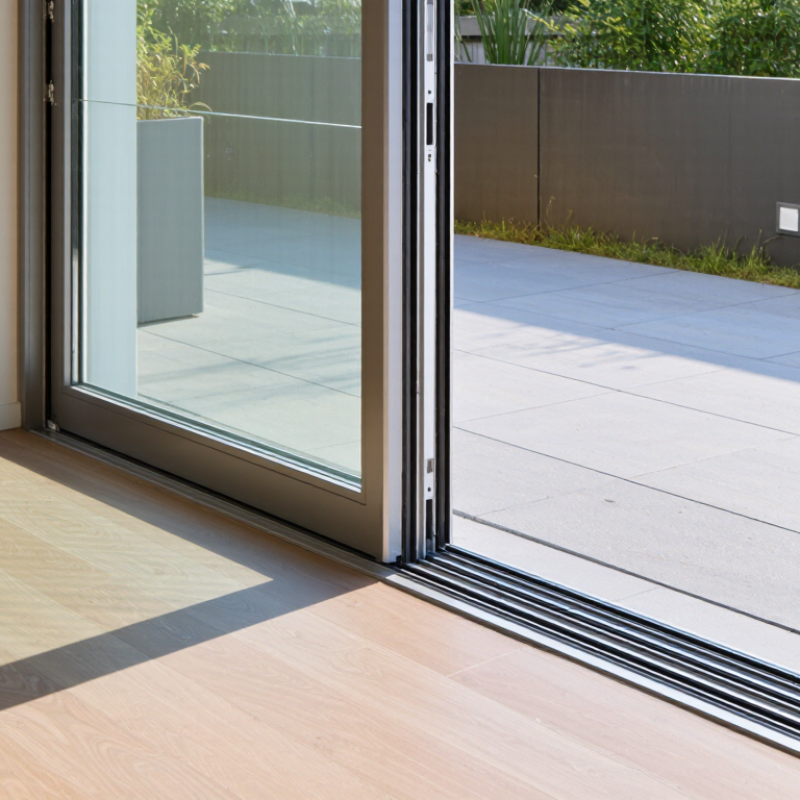
Sliding Door Types and Materials: Aluminum, uPVC, Timber, and Composite
For global buyers, sliding-door frames should be matched to climate, opening size, and maintenance capacity. Thermally broken aluminum offers slim sightlines and good rigidity, but untreated metal conducts heat readily. uPVC needs little routine finishing and can suit standard openings; very wide panels still require careful structural design. Timber feels warm and insulates well, though exposed edges and coatings need attention. Composite frames combine materials, but their performance depends on the exact construction—not the label alone.
Glazing matters as much as the frame. The U.S. Department of Energy estimates that windows account for 25–30% of residential heating and cooling energy use; this figure is not specific to sliding doors, but it highlights the cost of poor glazing choices. Check U-factor and solar heat gain coefficient ratings, such as those used in National Fenestration Rating Council product certification. Compare tested whole-unit values, not glass-only claims. There is no perfect frame. Even a well-specified door can disappoint if installation leaves gaps or drainage paths blocked.
Tips: Request test data for the complete door assembly, including frame, glass, and hardware. Ask how rollers handle the planned panel weight, and inspect corner joints and weather seals. For coastal sites, confirm corrosion resistance; for timber, ask about the finish-maintenance schedule. A detail often missed: showroom samples rarely show how smoothly a large panel moves after years of use.
Top Sliding Door Manufacturers in China for Global Buyers - Sliding Door Types and Materials: Aluminum, uPVC, Timber, and Composite
Material guide for comparing sliding-door products. Characteristics are general; actual performance depends on the complete door system, glazing, hardware, design, and installation.
| Frame material | Common sliding-door types | Typical strengths | Points to check | Often considered for | Useful buyer documentation |
|---|---|---|---|---|---|
| Aluminum | Two- or multi-panel sliding doors; lift-and-slide systems; thermally broken frames | Strong, dimensionally stable frames can accommodate large glazed panels. Aluminum is corrosion-resistant when the alloy, finish, and maintenance suit the exposure conditions. | Ask whether the frame has a thermal break; confirm coating or anodizing specifications, drainage details, hardware capacity, and tested whole-door performance. | Contemporary buildings, wide openings, and projects prioritizing slim sightlines | Frame and finish specifications; glazing configuration; test reports for the supplied door configuration |
| uPVC | Two- or multi-panel sliding doors; tilt-and-slide systems | PVC profiles do not rust and generally require little routine surface maintenance. Multi-chamber profiles and appropriate glazing can contribute to thermal performance. | Check reinforcement design, profile and hardware compatibility, sash size limits, UV-weathering suitability, and the tested air, water, and structural performance of the complete unit. | Residential projects where low routine maintenance and thermal performance are priorities | Profile details; reinforcement information; glazing specification; applicable product and performance test reports |
| Timber | Timber sliding doors; timber-aluminum clad sliding systems; lift-and-slide systems | Offers a natural appearance and can be specified in different species, finishes, and profiles. Timber is a relatively poor heat conductor compared with aluminum. | Confirm species, moisture control, joinery, protective coating, maintenance requirements, and sourcing documentation. Exposure and finish condition affect long-term upkeep. | Projects seeking a natural interior finish or timber architectural detailing | Timber species and origin details; coating and maintenance instructions; applicable sourcing certificates |
| Composite | Timber-aluminum clad doors; other engineered multi-material sliding systems | Combines materials to target different needs, such as a timber interior finish and a weather-resistant exterior cladding. Performance depends on the materials and how they are joined. | Request a clear material build-up, details of connections and drainage, repair guidance, warranty terms, and testing for the complete door rather than individual components alone. | Projects seeking different finishes or functions on the interior and exterior sides | Cross-section drawings; material and finish specifications; whole-product test reports; warranty and care instructions |
For international projects, confirm the required local standard and test method with the project team. Request test reports that match the proposed door configuration, including its dimensions, glazing, hardware, and frame.