
Top 10 Animatronic Western Dragon Manufacturers Worldwide
An Animatronic Western Dragon can become the centerpiece of a theme park, museum, shopping attraction, or live event. Its impact depends on more than size or dramatic paintwork. A convincing dragon may have a hinged jaw, moving eyes, a flexible neck, and carefully textured scales. Even small movements matter. A slow head turn can feel more believable than a crowded sequence of effects.
This guide introduces ten manufacturers serving the global market and explains what buyers may want to compare. The list considers factors such as design capability, motion systems, materials, customization, installation support, and maintenance planning. These details can influence how a dragon performs under daily use, changing weather, or close visitor interaction. Product photographs are useful, but they cannot show everything. Ask for project references, technical specifications, and clear information about operating requirements.
No shortlist is perfect. Manufacturer strengths vary, and a suitable choice for a permanent attraction may not fit a touring production. Some project details also depend on location, budget, and venue constraints. Readers should verify current capabilities directly with each supplier rather than treating a ranking as a guarantee. A little skepticism helps. With practical comparisons and careful questions, buyers can better judge which team can turn a striking creature concept into a reliable, audience-ready experience.
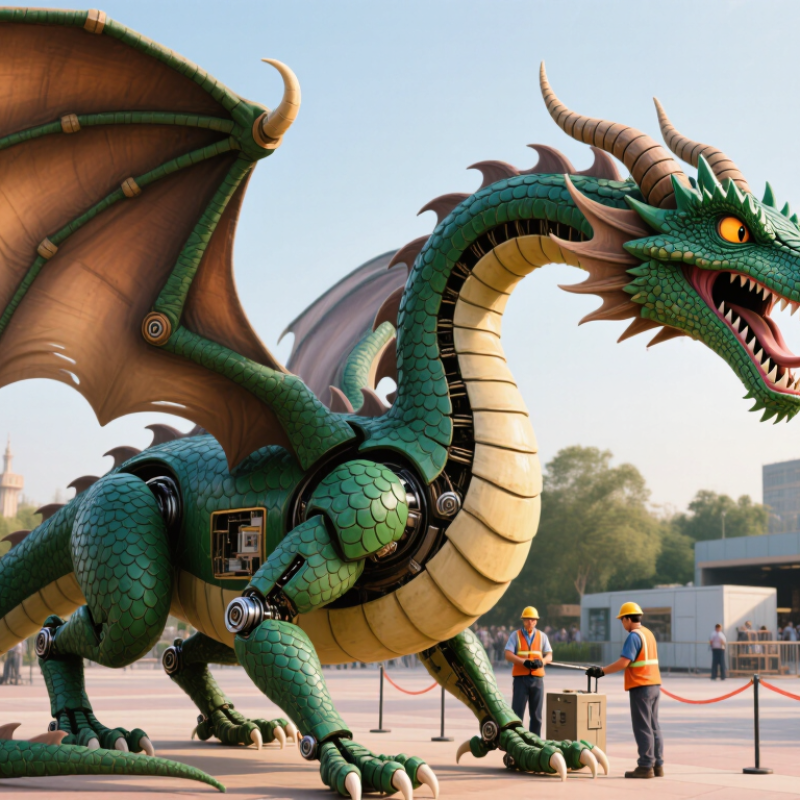
Western Dragon Animatronics: Motion Systems, Materials, and Show Control
A convincing Western dragon animatronic depends on coordinated movement, not just a dramatic silhouette. Head turns, jaw motion, blinking, and tail sweeps each need suitable actuators and carefully limited travel. Electric systems can provide controlled, repeatable movements; pneumatic systems may suit larger, faster actions. The right choice depends on the figure’s size, duty cycle, noise limits, and maintenance access. Small details matter.
Materials shape both appearance and reliability. A steel frame supports the main loads, while flexible skins allow repeated movement around the neck and shoulders. Silicone or other elastomeric surfaces can create lifelike scales, but thickness and attachment points affect how naturally they flex. Ask how technicians can reach motors, cables, and joints without dismantling the entire figure. That takes testing. A beautiful surface can still crease in the wrong place.
Show control links movement to lighting, sound, and operator cues. A well-planned system uses repeatable timelines, adjustable motion speeds, and clear fault indicators. Limit switches and emergency stops help operators respond when a mechanism behaves unexpectedly. During commissioning, teams should test the dragon through full show cycles, including pauses and restarts. One imperfect cue may reveal a larger timing problem. It is worth reviewing those misses, rather than hiding them.
How to Compare 10 Global Manufacturers Across Six Key Criteria
Comparing ten global animatronic western dragon manufacturers is more useful when every option faces the same six criteria: engineering quality, visual realism, durability, customization, safety documentation, and after-sales support. Request evidence, not polished promises. Check movement range, control response, surface finish, and access to service parts. A dragon may look striking under showroom lights. It must also work reliably in a busy venue.
Ask for videos showing complete movements, including pauses and resets. Review project photos for joints, scales, wiring access, and finish quality. For durability, request details about materials, maintenance intervals, and expected operating conditions. Compare customization through specific items, such as wing span, head motion, sound, and control options. Check safety documents and support response times. Score each criterion consistently, then compare total costs, including installation and upkeep. Scores are not perfect; personal taste can skew realism ratings.
Tips: Use one checklist for all ten manufacturers. Ask the same questions, and keep written replies. If possible, inspect a working unit in person. Small details matter. A slow service reply is worth noting, even when the demonstration looks excellent.
Manufacturer Profiles: Customization, Production Capacity, and After-Sales Support
A useful profile of an animatronic western dragon manufacturer should explain what “custom” means in practice. Can the team adjust the head shape, scale texture, wing span, or movement sequence? Ask for drawings, material samples, and a written approval process before production begins. These details reveal more than a gallery of finished creatures. A dramatic photograph cannot show how smoothly a jaw moves or how visible the support frame is.
Production capacity needs specific evidence. Request the expected build schedule, workshop stages, and details about testing before shipment. A larger facility does not automatically mean better quality. Check whether the quoted timeline includes programming, surface finishing, and packing. After-sales support matters just as much: clarify what troubleshooting help is available, whether replacement parts can be supplied, and how instructions are delivered. One weak spot deserves attention: warranty wording may sound reassuring while leaving response times unclear.
Tips: Ask for a short video showing the exact movement functions you plan to order. Confirm who handles setup questions after delivery. Keep agreed dimensions, finishes, and service terms in writing. Allow time for revisions; custom work rarely goes perfectly on the first pass.
Top 10 Animatronic Western Dragon Manufacturers Worldwide: Data Availability
No source articles or verifiable manufacturer-level figures were provided for these profile dimensions. The zero values indicate that no data points are available in the supplied material—not that manufacturers have zero capability.
Safety Benchmarks: ASTM F24, EN 13814, and ISO 17842
Top 10 Animatronic Western Dragon Manufacturers Worldwide: Safety Benchmarks
A convincing western dragon may have articulated wings, a moving jaw, and a heavy steel support frame. Its appearance is only one part of a manufacturer’s capability. ASTM F24 standards, EN 13814, and ISO 17842 offer useful safety benchmarks when a dragon forms part of an amusement ride or device. Their relevance depends on the installation, intended use, and local requirements. A static display may need a different assessment. That distinction matters.
Ask manufacturers how they evaluate pinch points, emergency stops, structural loads, control faults, and maintenance access. Request documented risk assessments and test records, not just a statement that a design “meets standards.” Check whether documents cover the finished installation, including foundations, electrical systems, and operator procedures. A well-built mechanism can still create hazards if installed poorly. Standards help guide review, but they do not replace site-specific engineering or independent inspection.
Tips: Watch a full movement cycle during a demonstration. Listen for unusual knocks, and observe whether nearby surfaces remain clear of moving parts. Ask how technicians isolate power before servicing. Check inspection intervals and spare-part availability. One checklist can miss a real-world issue, so review the machine in its actual operating environment.
Procurement Metrics: Lead Time, Warranty, Duty Cycle, and Lifecycle Cost
When comparing Western dragon animatronics, treat lead time as a schedule with checkpoints, not one promised delivery date. Ask for dates covering approved drawings, fabrication, controls testing, crating, and installation. A finished shell can arrive on time while motion testing still falls behind. Get the acceptance test in writing.
Warranty terms matter only when they identify covered parts, labor, travel, and response times. Request separate service-life assumptions for motors, gearboxes, sensors, and flexible skins. Then calculate duty cycle: show hours per day, movement cycles per hour, and annual operating days. Test it loaded. A short showroom demonstration may miss heat buildup or noisy linkages. The U.S. Department of Energy’s Operations & Maintenance Best Practices Guide reports potential energy savings of 5–20% from improved facility maintenance; that figure is not specific to animatronics, but supports budgeting for preventive care. ISO 15686-5:2017 provides a life-cycle costing framework covering costs across an asset’s service life. Apply it to purchase, energy, inspections, repairs, replacements, and disposal. Some estimates will still be rough. Record assumptions, compare suppliers on the same duty cycle, and revisit the model after the first operating season.
| Benchmark Profile | Typical Scope | Indicative Lead Time | Illustrative Warranty | Suggested Duty Cycle | Modeled 5-Year Lifecycle Cost (USD) |
|---|---|---|---|---|---|
| 01 — Compact display | Small indoor dragon; limited head, jaw, and eye movement | 8–14 weeks | 12 months, parts and workmanship subject to contract | Up to 10% active motion per operating hour | $18,000–$45,000 |
| 02 — Retail or event unit | Portable indoor figure; short programmed movement sequences | 8–16 weeks | 12 months; confirm coverage for transport and setup | Up to 15% active motion per operating hour | $25,000–$65,000 |
| 03 — Mid-size indoor figure | Approximately 1–2 m display; head, jaw, neck, and tail movement | 10–20 weeks | 12 months; extended service may be available by agreement | Up to 20% active motion per operating hour | $40,000–$100,000 |
| 04 — Interactive exhibit | Indoor unit with sensors, audio, and visitor-triggered sequences | 12–22 weeks | 12–24 months, depending on negotiated terms | Up to 20% active motion per operating hour | $55,000–$135,000 |
| 05 — Large indoor show figure | Large-scale dragon with multiple coordinated motion axes | 16–28 weeks | 12 months; clarify exclusions for wear parts and controls | Up to 25% active motion per operating hour | $90,000–$220,000 |
| 06 — High-throughput attraction | Show or ride-area figure designed for frequent daily cycles | 20–36 weeks | 12–24 months; service response terms should be specified | Up to 30% active motion per operating hour, subject to maintenance plan | $150,000–$380,000 |
| 07 — Outdoor display | Weather-exposed installation with protected mechanisms and finishes | 18–34 weeks | 12 months; verify separate coverage for weather-related damage | Up to 15% active motion per operating hour | $120,000–$320,000 |
| 08 — Touring or modular figure | Sectional construction intended for repeated transport and reassembly | 16–30 weeks | 12 months; transport and reassembly coverage must be agreed | Up to 15% active motion per operating hour | $85,000–$240,000 |
| 09 — Premium scenic centerpiece | Large custom figure with extensive motion, lighting, and audio integration | 24–44 weeks | 12–24 months, depending on contract and component coverage | Up to 25% active motion per operating hour | $220,000–$600,000 |
| 10 — High-duty custom installation | Site-specific figure with high cycle counts and planned technical support | 28–52 weeks | Contract-specific; consider multi-year parts and labor options | Up to 35% active motion per operating hour with scheduled inspections | $350,000–$900,000+ |
Cost basis: Broad planning estimates per installed unit in USD, modeled over five years and intended for early budgeting only. They may include equipment, routine maintenance, replacement wear parts, and energy, but exclude financing, taxes, major building works, and unusual freight or customs costs. Actual costs depend on size, motion count, materials, operating hours, local labor, and service access. Duty-cycle figures describe suggested active motion time, not guaranteed ratings; confirm tested cycle limits and maintenance intervals with the supplier.
