
10 Tips for Buying the Best Round Trampoline
Choosing a Round Trampoline is about more than finding a bright frame or a low price. The right model should fit your yard, suit its users, and include practical safety features. Look closely at the frame, springs, enclosure, weight limit, and warranty. A neatly stitched net and firmly anchored legs matter more than flashy extras.
Pediatrician and injury-prevention specialist Dr. Benjamin Hoffman has discussed trampoline risks in the context of child safety. The takeaway for shoppers, paraphrased rather than presented as a direct quotation, is that supervision alone cannot remove every risk. Equipment condition and thoughtful use matter, too. Check the product instructions, inspect wear-prone parts, and leave clear space around the trampoline. Small details count.
This guide’s ten tips will help you compare round models with a more careful eye. You’ll consider size, materials, assembly, replacement parts, weather exposure, and everyday upkeep. A large jumping surface may look inviting, but it can crowd a small yard. An affordable model may also cost more later if parts are hard to replace. There is no perfect pick for every household. Measure the space, read the specifications, and question claims that sound too good to be true.
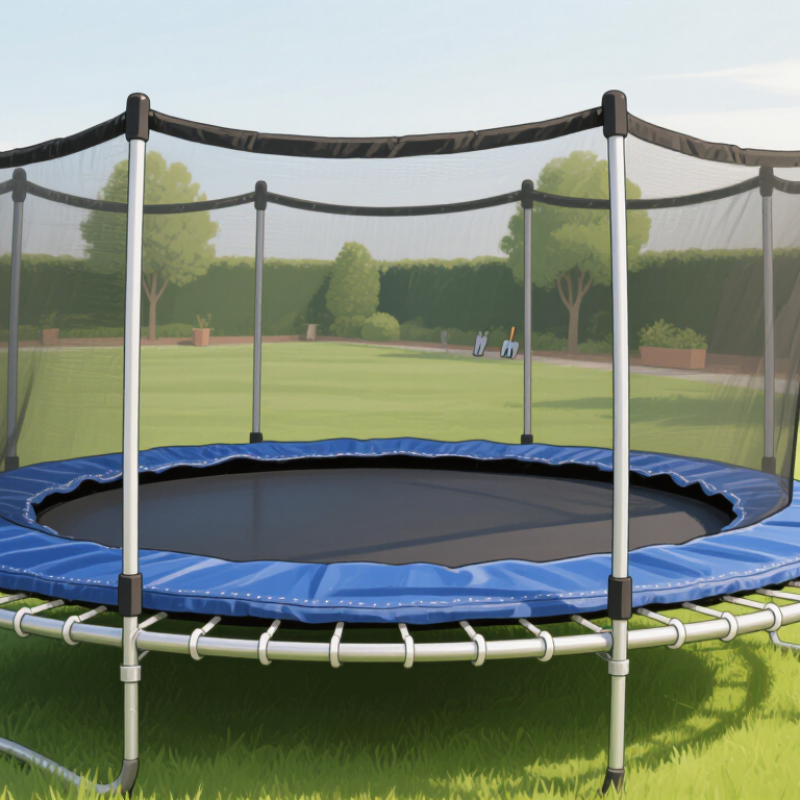
Assess Your Space, Users, and Intended Trampoline Use
Before comparing round trampolines, measure the usable ground—not just the open patch of lawn. Check the frame diameter, then allow the clearance specified in its manual. Look up, too: low branches, roof edges, and overhead wires can make a seemingly roomy spot unsuitable. The ground should be level and firm. Leave space for an adult to reach the entrance and inspect the enclosure. Small detail, big difference.
Think about who will jump and how. A child using the trampoline occasionally has different needs from several family members hoping to exercise. The American Academy of Pediatrics reported an estimated 98,000 trampoline-related emergency-department visits in the United States in 2009, based on CPSC NEISS data; it also noted that multiple jumpers raise collision risk. A safety net cannot remove every hazard. For a cautious setup, plan for one jumper at a time, and choose a size that leaves room for safe access rather than squeezing into the yard. I’d measure twice. People often forget the ladder and surrounding clearance. Decide whether the trampoline is for supervised play, light fitness, or both, then check the maker’s user and weight guidance before buying.
Compare Frame Design, Size, Weight Limits, and Materials
A round trampoline should feel stable before anyone jumps. Check how the frame ring joins the legs, and look for evenly spaced supports and tight, clean welds. A frame that rocks on level ground is a warning sign, not a minor quirk. Galvanized steel can resist rust, but coatings and joints still need regular inspection. Small details matter.
Compare the listed diameter with the usable jumping surface; the outer measurement includes the frame. Measure the yard, too, leaving clear space around the trampoline. Weight limits deserve careful reading. Follow the maker’s stated maximum, and check whether it applies to one jumper or several. Do not assume a heavier frame raises that limit. I’d also compare the mat’s UV resistance, stitching, spring material, and padding. A shiny surface can look reassuring, but it tells little about how seams will hold after seasons outdoors. There isn’t one perfect combination: a larger model may suit the yard poorly, while thicker components can add weight and complicate moving it. Check the care instructions and inspect exposed parts now and then.
10 Tips for Buying the Best Round Trampoline — Compare Frame Design, Size, Weight Limits, and Materials
Use this comparison as a shopping guide, not as a substitute for a product’s instructions. Dimensions and weight ratings vary by model; confirm the manufacturer’s specifications and follow the stated user and occupancy limits.
| Tip | What to Compare | Practical Guidance | Why It Matters |
|---|---|---|---|
| 01 | Measure the usable space | Round trampoline sizes are commonly listed by the outside frame diameter. Models around 8–10 ft suit more compact yards; 12–14 ft models need more room. Check the exact product dimensions and allow clear space around the trampoline. | The listed diameter does not include the extra clearance needed around the frame, enclosure, and access point. |
| 02 | Check the frame construction | Look for a sturdy steel frame with securely joined sections and legs that spread the load evenly. A larger model may use more legs or a different support layout than a smaller one. | Frame design affects stability and how well the structure supports repeated use. |
| 03 | Compare steel protection | Galvanized steel, including steel galvanized inside and out, is commonly used to help resist corrosion. Check the product details for the finish and care instructions. | Outdoor exposure to moisture can lead to corrosion; protective finishes can help, but do not eliminate the need for inspection and maintenance. |
| 04 | Understand the weight rating | Read the stated maximum user weight and whether the rating applies per user or to total load. Ratings differ by model, so use the specific figure supplied for the trampoline you are considering. | A trampoline’s rating is a safety limit, not a recommended target. Never exceed it or assume a larger diameter automatically means a higher rating. |
| 05 | Choose a spring or springless design | Spring models use steel springs between the frame and jumping mat. Springless designs use a different flexible support system. Compare the construction, replacement-part availability, and care requirements. | Support systems affect the feel of the bounce, maintenance needs, and the design of the area around the jumping surface. |
| 06 | Inspect the jumping mat | Check that the mat is made from durable, weather-resistant material, commonly woven polypropylene, and that its attachment points are designed for the model’s support system. | The mat receives repeated impact and outdoor exposure. A worn, damaged, or incorrectly fitted mat should not be used. |
| 07 | Evaluate the enclosure | Compare enclosure height, net material, pole padding, entry closure, and how the net attaches to the frame or jumping surface. Confirm that the enclosure is compatible with the exact trampoline model. | An enclosure can help reduce falls from the jumping area, but it does not remove the need for active supervision or safe-use rules. |
| 08 | Look at padding and exposed gaps | On spring models, check that padding covers the springs and frame when installed as directed. Inspect the design for gaps between the mat, springs, and enclosure. | Properly fitted padding and enclosure components help cover hard or moving parts. Replace damaged or displaced components before use. |
| 09 | Check assembly and maintenance | Review the assembly instructions, number of parts, tools required, and availability of replacement mats, springs, netting, and padding. Plan to inspect the trampoline regularly. | Correct assembly and ongoing checks help identify loose connections, wear, corrosion, or damage before continued use. |
| 10 | Match the model to its intended use | Check the age guidance, user limit, installation requirements, and applicable safety-standard information in the product documentation. Follow the instructions for anchoring and weather-related care. | Safe use depends on the complete setup and the manufacturer’s directions, not just the trampoline’s size or advertised features. |
Examine the Mat, Springs, Padding, and Enclosure
Tip 1: Check the jumping mat in bright daylight. Look for even stitching, securely attached loops, and a surface without frayed edges. Press the center gently; it should feel taut, not saggy. A new mat can still wear unevenly, so inspect it regularly.
Tip 2: Count and examine the springs, then compare their length and attachment points. They should sit evenly around the frame, with no visible rust, gaps, or stretched coils. Padding should cover the springs completely and stay in place when nudged. Thin padding may shift. That detail is easy to miss.
Tip 3: Test the enclosure poles and net before buying. The net should close securely and have no loose seams or openings near the mat. Check that each pole has a protective sleeve and feels steady when lightly pushed. Ask how replacement parts are measured; this is less exciting than bounce, but useful later. I once focused too much on size and overlooked how awkward a loose entrance could be. A careful fit check is worth the extra minute.
Check Safety Standards, Assembly Needs, and Warranty Coverage
A round trampoline should come with clear safety information, not just a confident product description. Check which safety standard applies in your market, then look for documentation showing the model was tested against it. A label alone may not tell the whole story. Inspect the frame, springs, padding, and enclosure details, and confirm that replacement parts are available. The net should close securely, while padding should cover exposed springs without shifting easily. Small details matter.
Assembly deserves equal attention. Read the instructions before buying, and check how many people are recommended for setup. A heavy frame can be awkward to position, even on level ground. Count the parts, allow a few uninterrupted hours, and keep children away from the work area. Do not assume every bolt is interchangeable. That is an easy mistake. After assembly, recheck connections and follow the maker’s guidance for anchoring and routine inspections.
Read the warranty terms carefully. Find out how long the frame, mat, springs, and enclosure are covered; coverage may differ by component. Check exclusions for weather damage, normal wear, or incorrect assembly, and note whether proof of purchase is required. A long warranty sounds reassuring, but its practical value depends on those details. I would rather see plain, specific terms than promises that leave basic questions unanswered.
Compare Prices, Maintenance Costs, and Replacement Part Availability
A low purchase price can hide expensive upkeep. Compare complete packages, including the frame, safety enclosure, ladder, and anchor kit. Check what the price excludes before judging two round trampolines side by side. A slightly higher price may include sturdier materials, but confirm that through product specifications rather than appearance alone. Keep receipts and note the model and frame dimensions.
Maintenance adds up over time. Look for clear cleaning and inspection instructions, and estimate the cost of replacing worn mats, springs, or enclosure netting. Outdoor exposure can fade fabric and encourage rust, especially in damp conditions. Inspect connections regularly and follow the manufacturer’s guidance. Small checks matter. I used to focus too much on the upfront price; that comparison missed the less obvious costs.
Before buying, search for replacement parts using the exact model number. Confirm that the mat, net, and spring lengths match your trampoline, since similar-looking parts may not fit. Check whether parts are sold individually, how they ship, and whether availability is stated clearly. If a seller cannot identify compatible parts, treat that as a practical concern, not a minor detail. Availability can change, so save the product details and ask about current stock before ordering.
