
How to Choose a Boiler Water Heater for Your Needs

Choosing a boiler water heater is a decision about comfort, fuel use, and how your home delivers heat. The U.S. Department of Energy’s Energy Saver guidance estimates that water heating accounts for about 18% of home energy use. That figure makes efficiency worth checking, but it does not identify the right unit for every household. A boiler serving radiators, for example, may need a different setup from a combi boiler supplying taps and space heating.

Hydronic-heating engineer John Siegenthaler, P.E., emphasizes a practical starting point: determine the building’s heat loss before sizing its heating equipment. That means considering insulation, window condition, local winter temperatures, and hot-water demand—not just counting bedrooms. An oversized boiler may cycle frequently; an undersized one may struggle on a cold morning. Small details matter.

Energy-efficiency expert Amory Lovins is often quoted: “The cheapest energy is the energy you don't use.” The idea applies here, though efficiency ratings alone cannot settle the choice. Compare fuel availability, installation requirements, maintenance access, and the boiler’s performance at your home’s actual operating conditions. A compact unit may look ideal on paper, yet prove awkward in a cramped utility room. This guide will help you weigh those trade-offs and ask better questions before buying. Some estimates will still be imperfect; real homes rarely behave exactly like a spreadsheet.
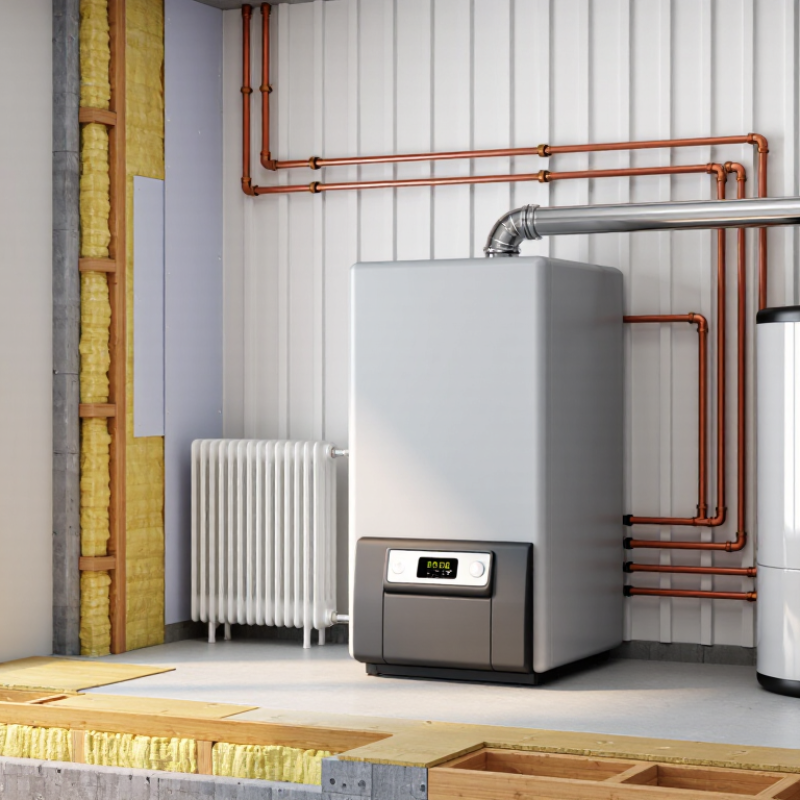
How to Choose a Boiler Water Heater for Your Needs

Understand Boiler Water Heater Types and How They Work

A boiler heats water or produces steam, then sends it through pipes to radiators, underfloor loops, or a hot-water cylinder. A conventional boiler works with a separate storage tank; a system boiler keeps key components inside the unit but still uses a cylinder. A combi boiler heats tap water on demand, so it needs no separate hot-water tank. Condensing models recover heat from exhaust gases, helping reduce wasted energy. The right type depends on household size, hot-water demand, available space, and existing pipework.

Efficiency figures offer a useful comparison, not a promise of lower bills. The U.S. Department of Energy defines AFUE as the share of fuel converted into heat over a typical year. ENERGY STAR’s Residential Boilers specification sets qualification thresholds of 90% AFUE for gas boilers and 87% for oil boilers. A high rating can still disappoint if the unit is oversized or poorly installed. Real homes are messier than test conditions. Check whether your radiators, controls, and flue suit the proposed system.

Tips: Ask a qualified heating professional to calculate heat loss, rather than choosing by floor area alone. Note how many showers run during the morning rush. And check cylinder space before selecting a system boiler.

Assess Household Hot Water Demand and Usage Patterns

A boiler water heater should match the way your household uses hot water, not just its number of occupants. Two adults may use little water on weekdays, while a family of four may shower, run laundry, and wash dishes within one busy hour. Note when these activities overlap. Peak demand matters more than the daily total.

Check the fixtures used at the same time. A shower may draw roughly 2 gallons per minute, though older or high-flow fixtures can use more. Add the likely flow from another shower or a kitchen tap to estimate simultaneous demand. Then compare that figure with the heater’s rated output and recovery rate. A unit that meets average demand may still struggle during a morning rush.

Keep a simple log for several days. Record shower length, bath frequency, laundry timing, and any periods when hot water runs short. Household routines change, so one week may not tell the whole story. My first estimate is often too tidy; real mornings are less predictable. If possible, check the appliance specifications and ask a qualified installer to confirm the calculation, especially if several fixtures may operate together. Seasonal visitors or a growing household can also shift demand, so leave room for realistic changes without sizing far beyond actual use.

Compare Fuel Sources, Efficiency Ratings, and Operating Costs

A boiler water heater should match the fuel available at your property, not just the lowest price on a product label. Natural gas may cost less per unit in some areas, while electricity can be simpler where gas lines are unavailable. Oil and propane bring delivery costs and storage needs. Check local fuel rates, connection fees, and service access before comparing equipment. Small details matter.

Efficiency ratings help estimate how much purchased energy becomes usable heat. A higher rating can reduce waste, but it does not automatically mean lower bills. Compare the rating for each fuel type, then consider the system’s size, controls, and installation quality. Poor sizing can cause frequent cycling or slow recovery after a long shower. Ask a qualified installer to calculate your household’s hot-water demand rather than guessing from the old unit.

Put the numbers on paper. Estimate annual energy use by dividing expected heat demand by the unit’s efficiency, then multiply by your local energy rate. Include routine maintenance, venting changes, and any delivery or connection charges. The estimate will still be imperfect; fuel prices and household habits change. That is worth admitting. A simple comparison of yearly costs, backed by written quotes, is often more useful than chasing the highest efficiency figure alone.

How to Choose a Boiler Water Heater: Fuel Cost and Efficiency

Estimated annual fuel costs to deliver 100 MMBtu of useful heat, comparing representative seasonal efficiencies for natural gas, heating oil, and electric boilers.

Estimates use example fuel prices of $1.20 per therm for natural gas, $3.50 per gallon for heating oil, and $0.17 per kWh for electricity. Assumed seasonal efficiencies are 95%, 87%, and 99%, respectively. Actual costs vary by location, equipment, usage, and utility rates; estimates exclude service fees and maintenance.

Check Installation Requirements, Space, and Safety Considerations

A boiler water heater may fit your household’s demand but still fail the space test. Measure the unit’s footprint, then check the manufacturer’s required service clearances. A narrow closet can make routine repairs awkward. Look at the path from the entrance to the installation area, including stairs, doorways, and tight turns. The unit must also connect to suitable water, fuel, electrical, venting, and drainage systems. Existing connections are not automatically compatible.

Check how the appliance handles exhaust and combustion air, especially in a small or tightly sealed room. Some installations need a dedicated air supply, specific vent materials, or a drain for condensate. Keep access to shutoff valves clear. Never block vents or place stored items beside hot surfaces. A qualified heating professional can assess these requirements and verify the installation against the unit’s instructions and applicable local standards. I would recheck measurements before ordering; a few missed inches can create a costly problem. Space planning is easy to underestimate.

Match Boiler Capacity and Features to Your Long-Term Needs

Boiler capacity should match the home’s actual heat loss, not just its floor area. Insulation, window quality, ceiling height, and local winter temperatures all affect demand. A qualified heating professional can calculate the load and check whether the existing radiators and pipework can deliver it. That matters. An oversized boiler may cycle on and off too often, while an undersized unit can struggle during cold spells. If the boiler also supplies hot water, consider how many showers or taps may run at once. A household with a storage cylinder has different needs from one relying on an instantaneous system. Sizing is not an exact art; assumptions about future use can be wrong.

Think beyond today’s household. A new bathroom, an added room, or better insulation could change what the system needs over the next decade. Choose a capacity range that fits realistic plans, rather than paying for excess output “just in case.” Useful features may include separate heating zones, clear temperature controls, and parts that local technicians can service. Check fuel availability and whether the boiler works with existing controls and emitters. Efficiency ratings help compare models, but installation quality and regular maintenance also affect real-world performance. Small detail, big difference. Ask for the proposed capacity and hot-water output in writing, along with the assumptions behind them. That makes it easier to spot a recommendation based on guesswork.

How to Choose a Boiler Water Heater for Your Needs — Match Boiler Capacity and Features to Your Long-Term Needs

Household Need Typical Starting Point Boiler Type to Consider Useful Features Long-Term Check
Smaller home with one bathroom and modest simultaneous hot-water use A combi boiler in the approximate 24–30 kW range may suit some homes. At a 35°C temperature rise, 24 kW provides about 9.8 L/min theoretically, and 30 kW about 12.3 L/min. Combi, if there is no need for stored hot water and the incoming mains supply is adequate Modulating burner, clear controls, weather compensation compatibility, and a suitable hot-water flow setting Check the home’s heat loss and incoming water flow and pressure; the boiler’s space-heating output may need to be much lower than its hot-water rating.
Home with two bathrooms or regular simultaneous hot-water use A higher-output combi may improve flow at one outlet, but it cannot provide unlimited hot water to multiple outlets at once. Combi where usage is mainly sequential; system boiler with a hot-water cylinder where simultaneous demand is frequent Stored-hot-water capacity matched to peak use, cylinder thermostat, and controls that support timed heating Estimate peak demand, including showers and baths used at the same time. Confirm cylinder recovery time and available installation space.
Home with several bathrooms or frequent high hot-water demand Size the boiler for the calculated space-heating load and select a cylinder based on the household’s peak hot-water demand. System boiler with an appropriately sized cylinder; a regular boiler may suit an existing open-vented system Well-insulated cylinder, effective scheduling, and compatible solar-thermal or other heat-source connections where appropriate Review household size, bathing habits, future extensions, and cylinder location before choosing capacity.
Older or larger home with high space-heating demand Use a room-by-room heat-loss calculation rather than floor area or bedroom count alone. Combi, system, or regular boiler depending on heat loss, hot-water demand, and existing system layout Wide modulation range, weather compensation, and controls suited to the home’s heating zones Insulation, draught-proofing, radiator sizes, and local design temperatures affect the required output. Reassess after major energy-efficiency upgrades.
Home with limited space and no need for stored hot water A combi can reduce the need for a separate cylinder and cold-water storage tank, subject to local system requirements. Combi, if mains water performance and simultaneous-use expectations are suitable Compact installation dimensions, accessible service clearances, and straightforward controls Check that maintenance access, condensate drainage, flue arrangements, and replacement access are practical.
Home planning a future extension, additional bathroom, or major renovation Plan around the completed home’s calculated heat loss and expected hot-water demand—not an oversized allowance alone. Choose the system type after reviewing the renovation design and likely peak demand Flexible controls, zoning capability, and compatibility with planned system changes A qualified heating professional should confirm whether the boiler, emitters, pipework, and cylinder will meet future requirements.
Important sizing note: These are planning guidelines, not a final boiler specification. Boiler capacity should be selected using a heat-loss calculation and a separate assessment of domestic hot-water demand. The flow figures shown are theoretical estimates at a 35°C temperature rise; actual delivery depends on the appliance, incoming water temperature, mains flow and pressure, and system conditions. Have a qualified heating professional verify the design and local regulations.