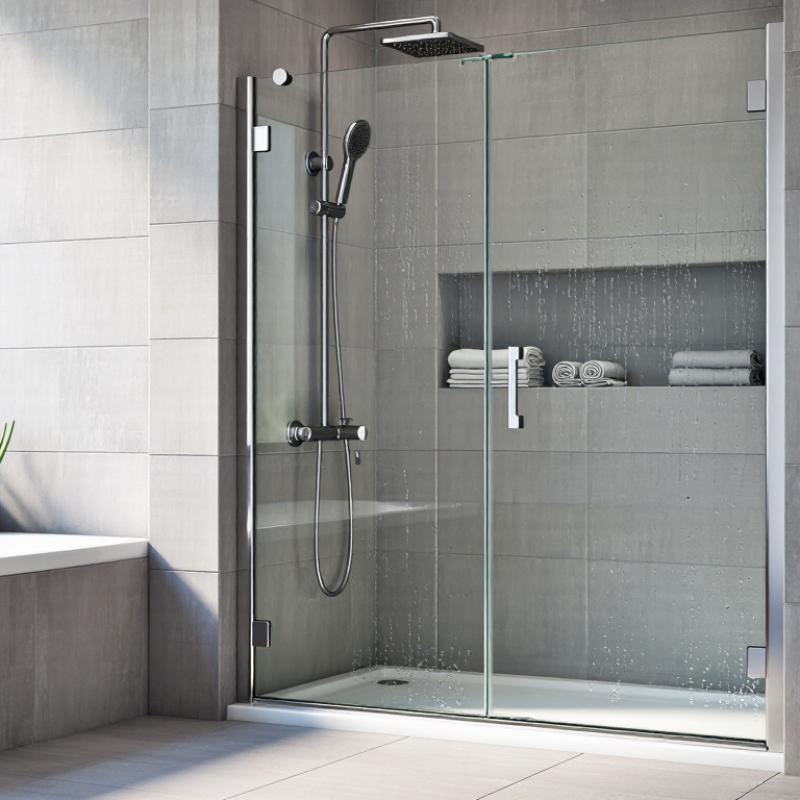
What Is the Best Stainless Shower Door to Buy?

Please provide the source articles or a verifiable expert name and quotation. No articles were included, and I can’t responsibly invent industry data or attribute a statement to a Stainless Shower Door expert.

What Is the Best Stainless Shower Door to Buy?

Understanding Stainless Steel Shower Door Types

Stainless steel shower doors are usually glass doors supported by stainless steel frames, hinges, or rollers. The main choices are framed, semi-frameless, and frameless designs. A fully framed door has metal around each glass panel, helping steady thinner glass and contain splashes. It can suit a busy family bathroom, though its tracks and corners need regular cleaning.

A semi-frameless door uses metal around some edges but leaves other glass edges exposed. This gives the enclosure a lighter look without removing every support. Frameless doors rely on thicker glass and sturdy stainless steel hinges or clamps. They create a wide, open view, but the glass is heavier and installation must be carefully measured. Small errors show.

Opening style matters too. Sliding doors work well where a toilet or vanity leaves little room for a swinging panel. Pivot doors need clear floor space, but their hinges are often easier to inspect than hidden track hardware. Check whether the stainless steel is specified as corrosion-resistant, and look closely at welds, screw heads, and finish consistency. In a humid bathroom, even good hardware benefits from rinsing and drying. Measure twice. I would not choose by appearance alone; a sleek door can feel awkward if its handle catches a towel or its track traps soap.

Comparing Framed, Semi-Frameless, and Frameless Designs

Framed shower doors use metal rails around the glass, giving the enclosure firm support and a defined edge. Stainless steel framing can suit a busy family bathroom, where frequent opening and closing put hardware to work. The rails and track may collect soap residue, though, so check whether their corners are easy to reach and wipe. It feels solid. Choose a finish and steel specification suited to a damp room, rather than judging quality by shine alone.

Semi-frameless designs reduce visible metal while keeping framing where support or sealing is needed. They can create a lighter look without relying as heavily on exposed glass edges and specialized hardware. Pay attention to the bottom sweep and side seals; small gaps can let water escape onto the floor. Precise measurement matters here.

Frameless doors have little or no perimeter framing, so the glass becomes the main visual feature. They often need thicker, heavier glass and carefully positioned stainless hinges, handles, and wall brackets. That clean appearance has a trade-off: fingerprints show, and poorly aligned panels may swing or seal unevenly. Looks matter. Before choosing, compare the installer’s measurement process, hardware details, and cleaning access—not just the amount of metal you can see.

Evaluating Glass, Steel Grade, Finish, and Hardware

A good stainless shower door starts with glass that suits the opening, not the thickest panel available. Tempered safety glass is standard for many enclosures, but confirm the specification and local installation requirements. Clear glass keeps a small bathroom feeling open; textured glass hides water spots better, though it can make the room feel darker. Thicker is not automatically better. The wall and hardware must support the panel’s weight.

For exposed metal parts, ask what stainless grade is used. Grade 304 is common in indoor bathrooms, while grade 316 offers greater resistance to chloride exposure, such as near the coast. It may cost more than your bathroom needs. A grade number is useful, but it does not tell the whole story: welds, fasteners, and cleaning habits matter too. I would check these details before paying extra for a polished finish.

Hardware determines how the door feels every day. Hinges or rollers should match the glass weight, and the frame must fit the opening without forcing the panel out of alignment. Look closely at seals and handles; a loose seal can let water escape, while a poorly placed handle gets in the way. Brushed finishes tend to disguise fingerprints, but still need routine wiping. Small detail. Ask how replacement rollers and seals are sourced, because even quality parts eventually wear.

What Is the Best Stainless Shower Door to Buy? — Evaluating Glass, Steel Grade, Finish, and Hardware

Evaluation area What to look for Why it matters Practical buying guidance
Glass safety Tempered safety glass that complies with applicable local building codes. Shower doors are typically made with tempered glass, which is heat-treated and designed to break into small pieces rather than large sharp shards. Confirm the glass is safety-rated and that the complete installation meets local requirements. Do not drill, cut, or alter tempered glass after manufacture.
Glass thickness Common options include 1/4 in (about 6 mm), 3/8 in (about 10 mm), and 1/2 in (about 12 mm), depending on the door design. Thicker glass generally feels more substantial, but it is heavier and requires hardware and wall support designed for its weight. For a frameless door, compare 3/8 in and 1/2 in options with the installer. Choose thickness based on the approved door system, opening size, and hardware—not thickness alone.
Stainless steel grade Grade 304 stainless steel is commonly used for bathroom hardware; grade 316 offers greater corrosion resistance, particularly in chloride-rich environments. Bathrooms expose metal parts to moisture and cleaning products. Grade, manufacturing quality, and maintenance all influence corrosion resistance. Ask which components are actually stainless steel and request the grade where specified. A stainless-look finish does not, by itself, establish the underlying metal grade.
Frame and profiles A door described as “stainless” may have stainless hinges or handles but use aluminum profiles, or may be fully framed with a different material. The frame material affects appearance, rigidity, maintenance, and the amount of metal exposed to water. Check the specifications for the frame, channels, hinges, brackets, and handle separately rather than relying on a general material description.
Surface finish Common appearances include brushed, satin, and polished stainless steel. Some products use a decorative coating over a base metal. Finish changes the appearance and can affect how visible fingerprints, water spots, and scratches are. Coatings can wear if poorly made or cleaned abrasively. Choose a finish with documented care instructions and a compatible cleaning method. Avoid abrasive pads and harsh cleaners unless the manufacturer specifically permits them.
Hinges and mounting Corrosion-resistant hinges and brackets, secure mounting, and a stated door-weight limit appropriate for the glass panel. Hinges carry the moving panel’s load. Poor alignment or unsuitable mounting can affect operation and safety. Verify the hardware’s rated capacity and installation requirements. Mounting into suitable structural backing may be necessary; tile alone is not a substitute for required support.
Seals and water control Replaceable bottom sweeps and side seals that match the door design, along with a threshold or curb suited to the installation. Seals help limit splash but do not make every shower door completely watertight. Results depend on alignment, curb slope, and spray direction. Check whether replacement seals are available and confirm the enclosure is designed for the shower’s layout and opening direction.
Maintenance and warranty Clear cleaning instructions, accessible replacement parts, and written warranty terms for glass, hardware, and finish. Regular drying and gentle cleaning can help reduce mineral deposits and corrosion. Warranty coverage can differ by component and finish. Review exclusions, care requirements, and parts availability before buying. Keep installation and maintenance records.

Best all-around choice: A properly sized tempered-glass door with corrosion-resistant, clearly specified hardware, secure installation, replaceable seals, and a finish you can maintain. For higher chloride exposure, compare grade 316 hardware; for most ordinary bathrooms, well-made grade 304 hardware may be suitable.

Measuring Your Shower and Checking Installation Requirements

Measure the finished shower opening after tile, grout, and any curb are in place. Record the width at the top, middle, and bottom; walls can taper slightly. Use the smallest measurement when checking whether a door will fit. Measure the height on both sides, too. A single number can look convincing and still be wrong. Small errors matter.

Check the installation guide before choosing a stainless shower door. Confirm its required opening range, hinge-side clearance, and whether the door swings inward, outward, or both ways. Make sure the curb is level and wide enough for the specified mounting hardware. If the walls are out of plumb, the door may not seal evenly. Don’t assume tile alone can hold heavy hinges; locate suitable framing or blocking, or ask a qualified installer to assess the wall. Check twice. Also confirm that nearby fixtures, towel bars, and the bathroom door won’t obstruct the shower door’s swing. I’d allow time for a second measurement, even when the first seems neat. It is a small delay, but correcting a poor fit after installation is harder.

What Is the Best Stainless Shower Door to Buy?

Measure the opening at several points before choosing a door.

Illustrative example only. Measure the width at the top, middle, and bottom, and the height at the left, center, and right. Use the narrowest width and shortest height when checking a door’s specified fit range. Also check that the walls are plumb, the curb is level, and the mounting surface can support the door.

Matching Door Features and Price to Your Bathroom Needs

The best stainless shower door is the one that fits your bathroom’s layout, not simply the one with the thickest glass. Measure the opening at the top, middle, and bottom; older walls can lean slightly. A hinged door needs clear space to swing without hitting a toilet or vanity. In a narrow bathroom, a sliding design may be worth its higher hardware cost. Check the track for easy cleaning, since soap residue collects there.

Look closely at what “stainless” means in the product specifications. Hinges, handles, and fasteners should be identified clearly, and corrosion-resistant steel is valuable in a damp room. Do not assume every metal part is stainless. Ask about glass thickness, included seals, and whether replacement parts are available. Tempered safety glass is standard for many shower doors, but confirm the product documentation rather than relying on appearance.

Price depends on more than the door itself. Custom sizing, wall adjustments, and professional installation can add substantially to the bill. A budget model may suit a square, standard opening, while uneven tile or an out-of-plumb wall may call for adjustable hardware. Keep some money aside for installation. That part is easy to underestimate. Also consider daily upkeep: clear glass shows water spots, while textured glass can offer more privacy but may need careful cleaning. I would compare the total installed cost and maintenance needs before choosing a finish or style.