
2026 Best Feather Flags for Global Buyers?
Choosing the right Feather Flags in 2026 requires more than comparing bright colors and low prices. Global buyers need signage that remains visible, stable, and professional across different markets, climates, and event settings. A flag that performs well beside a quiet indoor entrance may fail on a windy beach or crowded outdoor street.
This guide examines practical factors behind dependable purchasing decisions. It considers fabric quality, stitching, pole flexibility, base options, printing clarity, packaging, and supplier communication. Recycled polyester may support sustainability goals, while tightly woven fabric can improve color appearance and reduce early fraying. However, material claims deserve careful checking. Not every “premium” label means better performance.
Real experience matters.
A reliable supplier should provide clear dimensions, production samples, realistic lead times, and documented quality checks. Buyers should also confirm whether the base suits grass, concrete, sand, or temporary indoor flooring. Small details matter, such as reinforced sleeves, washable graphics, and replacement parts that are easy to order.
This review is designed for retailers, event agencies, resellers, and brands buying internationally. It balances visual impact with shipping practicality, maintenance needs, and long-term value. Prices can change. Factory capacity can change too. That is why product comparisons should be treated as guidance, not permanent promises. The best Feather Flags may not be the cheapest or tallest options. They should fit the buyer’s message, location, budget, and expected frequency of use. A few recommendations may require further testing, especially in extreme weather. That limitation is worth admitting.
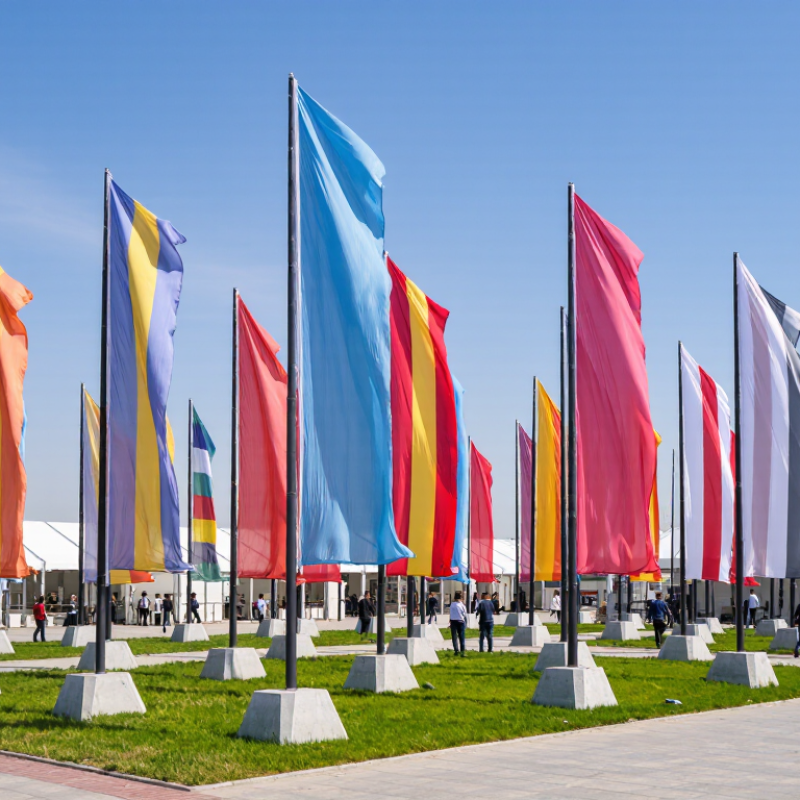
What Feather Flags Are and How They Work
Feather flags are tall, teardrop-shaped signs designed to move with the wind. A flexible pole supports printed fabric, while a ground base keeps the display upright. Unlike rigid boards, the flag remains visible when air flows around it. Its curved edge also helps the message stay readable from passing angles. In 2026, global buyers should examine fabric weight, stitching, pole strength, and base stability before choosing a display. These details affect performance more than bright colors alone. A flag may look attractive online but feel weak in real weather. That is an important limitation to remember.
The printing process usually transfers a graphic onto polyester fabric. The image should appear clearly on one or both sides, depending on the construction. Outdoor use requires colorfast ink and reinforced seams. A water-filled cross base suits hard surfaces, while a ground spike works better in soil. Measure the installation area carefully. Crowded entrances can turn a useful sign into an obstruction. My practical preference is a replaceable pole system, because one broken section should not end the flag’s service life. Still, no feather flag performs perfectly in strong gusts.
Tips: Choose the base for the surface, not the picture. Check the packed size before international shipping. Request fabric and seam samples when possible. Review wind guidance from the supplier. Even experienced buyers can underestimate setup time.
Key Features Global Buyers Should Evaluate in 2026
Choosing the best feather flag in 2026 requires more than comparing colors and prices. Global buyers should evaluate fabric density, stitching quality, pole flexibility, and print accuracy. A tightly woven polyester flag usually resists fraying better during repeated outdoor use. However, heavier fabric may reduce movement in light wind. That trade-off matters.
Check the pole sections carefully. Fiberglass poles should bend smoothly without sharp stress points. The base must match the installation surface, whether soil, concrete, or a weighted indoor stand. Buyers should also inspect color consistency between the digital proof and the finished flag. Small differences are common, but large shifts can weaken brand visibility. Ask for test photos, material details, packaging dimensions, and replacement-part options. These practical details often reveal more than a polished product page.
Tips: Test one sample before placing a large order. Place it outdoors for several days. Observe fading, twisting, water resistance, and base stability. Also confirm care instructions and shipment protection. Local display requirements may differ, so review relevant safety guidance before installation. A low price can become expensive after repeated replacements. I would not assume every “weatherproof” claim means long-term durability. Real conditions are less forgiving than product descriptions. Leave room for that uncertainty when planning your budget.
Comparing Materials, Sizes, Shapes, and Base Options
For global buyers, feather flag performance begins with material choice. Knitted polyester usually creates brighter graphics and softer movement. Woven polyester feels stronger, but it can look heavier in light wind. Look for tested fabric weight, UV resistance, and colorfastness data. ASTM D5035 tensile testing can reveal weak seams. Many sellers skip this detail. That is worth questioning.
Size changes visibility and transport costs. A 2.5-meter flag suits shop entrances and crowded events. A 4-meter version attracts attention beside roads or exhibition halls. Teardrop shapes offer a steadier profile, while traditional feather shapes create more movement. According to the Outdoor Advertising Association of America’s 2023 report, U.S. out-of-home advertising revenue reached $9.1 billion. That growth supports demand for reusable outdoor displays, but visibility alone should not decide the purchase.
Base selection must match the surface and weather. Cross bases work on flat indoor floors, especially with water bags. Ground spikes suit soil, grass, and temporary outdoor use. Heavy steel plates provide stability on pavement, yet they are difficult to carry. ASCE 7-22 evaluates wind pressure through speed, exposure, and height, not a universal “windproof” label. Ask for tested wind limits and replacement-part availability. My practical mistake was choosing a light base for convenience; the flag looked excellent, then tilted after one afternoon of gusts.
2026 Best Feather Flags for Global Buyers
Comparing materials, sizes, shapes, and base options for different indoor and outdoor applications.
Materials
Knitted polyester is lightweight and allows good print-through. Woven polyester offers a smoother appearance, while oxford polyester is heavier and more resistant to abrasion.
Common Sizes
Typical total heights range from approximately 2.4 m to 5.5 m. Smaller flags suit entrances and indoor displays; larger flags provide greater visibility outdoors.
Shapes
Feather shapes provide a tall visual area, teardrop shapes are compact and stable, and blade shapes offer a clean vertical presentation.
Base Options
Ground spikes and auger bases suit soil. Cross bases with water bags work on hard surfaces, while weighted car-foot bases are useful for paved outdoor areas.
The chart uses representative midpoints of commonly specified commercial fabric weights. Actual specifications may vary by supplier, coating, printing process, and intended use.
Customization, Printing Quality, and Brand Visibility
2026 Best Feather Flags for Global Buyers?
Customization, Printing Quality, and Brand Visibility
For global buyers, a feather flag should balance visibility, transport, and local messaging. Custom dimensions matter. A 2.8-meter flag suits indoor entrances, while a 4-meter model performs better beside wide roads. Dye-sublimation printing embeds ink into polyester fibers. It usually produces sharper gradients and better outdoor durability than surface printing. Grand View Research valued the global digital printing market at more than US$36 billion in 2022. This signals stronger demand for detailed, short-run graphics.
Material selection affects both appearance and reliability. A knitted polyester fabric around 110–115 gsm can remain flexible in wind. Reinforced sleeves reduce tearing near the pole connection. Ask suppliers for color-control samples, wash tests, and ultraviolet exposure results. ISO 12647-based color management can improve repeat orders, although fabric often changes the final tone. That limitation is easy to overlook. PQ Media’s Global Out-of-Home Media Forecast reported global out-of-home advertising spending near US$40 billion in 2023. Feather flags benefit from this visual environment, but crowded spaces reduce impact.
Tips: Use one message, one strong contrast, and a logo visible from several meters away. Leave breathing space around text. Request artwork proofs before production. Check local wind conditions and ground bases before ordering. A lighter base may be convenient, but it can become unstable outdoors. Rotate campaign messages periodically. Repetition builds recognition, yet identical graphics can become invisible to regular visitors.
International Sourcing, Compliance, Pricing, and Delivery
2026 Best Feather Flags for Global Buyers?
International sourcing begins with a clear product specification. Request the flag height, pole material, base type, fabric weight, stitching method, and print process. Polyester fabric around 110–130 gsm is common for outdoor use, but local weather still matters. Strong coastal wind needs a different base from a sheltered shopping street. Small details matter.
Compliance should be checked before payment. Ask suppliers for material test reports, ink safety information, fire-retardancy documents where required, and packaging details. Requirements differ by destination, venue, and intended use. Confirm labeling, recycling marks, customs classification, and import documents with a qualified local adviser. Do not treat a supplier declaration as complete proof. I have seen paperwork look convincing while missing a necessary test standard. That mistake becomes expensive at the port.
Compare landed cost, not only the factory quote. Include sampling, artwork preparation, inspection, export packing, freight, duties, taxes, and possible storage fees. A pre-production sample can reveal color shifts, weak hems, or an unstable ground spike. Delivery planning should include production time, inspection time, customs clearance, and a buffer for seasonal congestion. Air freight may protect a launch date, while consolidated sea freight can reduce unit cost. Confirm the Incoterms, carton dimensions, tracking method, and replacement policy in writing. The cheapest option is not always the most reliable. Sometimes, the “best” forecast is still wrong.
Conclusion
Feather Flags are lightweight, vertical advertising displays designed to attract attention through their tall, flowing shape and easy movement in the wind. This guide explains how they work and what global buyers should evaluate in 2026, including fabric durability, pole strength, print clarity, weather resistance, portability, and installation safety. It compares common materials, sizes, shapes, and base options to help businesses select displays suitable for indoor venues, streets, exhibitions, retail areas, and outdoor events.
The guide also explores customization, color accuracy, double-sided printing, and brand visibility, while highlighting practical considerations for international sourcing. Buyers will learn how to review product specifications, packaging, compliance documentation, pricing, shipping arrangements, and delivery schedules before placing an order. By balancing local climate, venue requirements, expected usage, budget, and maintenance needs, businesses can choose the best Feather Flags for their market and achieve reliable, professional visibility across different locations.
